
Featured Exhibition
6 min
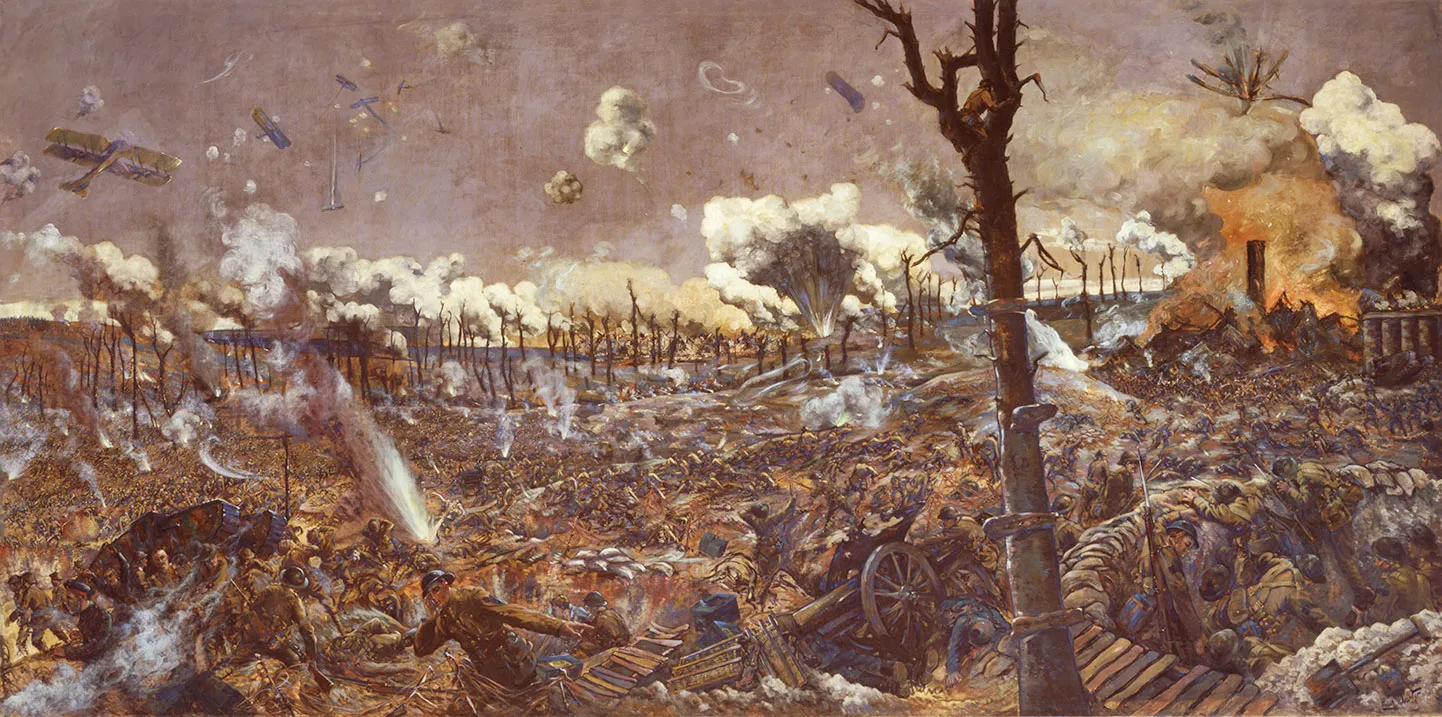
(image) “Battle of Courcelette”, 1916
Oil on canvas, By Louis Alexander Weirter
Beaverbrook Collection of War Art
Canadian War Museum
CWM 19710261-0788
In the Trenches
Private Eric Bradford


Resting in Reserve Trenches, 2nd Canadian Field Ambulance. June 1916
Department of National Defence
Library and Archives Canada
Item 3194769
Understanding War Neurosis

Views taken on Christmas Day, 1917
at Granville Special Hospital, Buxton
December 1917
Canadian War Museum
Item CWM 19930003-607


& the Honourably Wounded
Heroes?
Throughout the course of
the Great War 203 Canadian soldiers were sentenced to death on grounds of desertion or cowardice
22 executed by firing squad
181 sentenced to penal labour
Their names did not appear in Canada's Books of Remembrance until 2001.
Letter of an anonymous Canadian stretcher bearer
to his wife, 5 January 1917

Malingering may not have been as common as authorities feared, but many neurosis patients were suspected of faking or exaggerating their condition, both by doctors and fellow soldiers. Serving troops tended to have varied opinions of shell shocked men, sometimes seeing them as cowards or sometimes being more understanding if they experienced the brutality of the conflict for themselves.
As soldiers deserted or refused to carry out their duties, however, military authorities were quick to deem them cowards or malingerers if they claimed to be shell shocked. While some were let off with a warning, court-martials were not uncommon and authorities generally did not consider shell shock an explanation for desertion.
Officer helping a battered Canadian to Dressing Station. September 1916
Department of National Defence
Library and Archives Canada
Item 3395791
After the Armistice


Many men affected by war neuroses were left without financial support from the Board of Pension Commissioners and often had difficulty holding a job to support themselves and their families.
The Pension Commission considered that shell shock originated from a genetic predisposition. Large numbers of veterans were denied a pension, particularly those who started experiencing nervous symptoms years after the end of the war. Their claims for a pension were almost always rejected, as the Pension Board ruled that the elapsed time meant their condition was not attributable to service.
Basket-making at Military Hospital in Cobourg, 1917
Department of Soldier's Civil Re-establishment
University of Toronto Archives
Item B1999-0011-003P-11-B
16.4 %
of regular force veterans who left the Canadian Armed Forces beween 1998 and 2015 were diagnosed with PTSD.
In comparison, about 8 % of Canadians who experience a traumatic event develop PTSD.

We think you might also like...



Support Us
Enjoying our Digital Exhibitions?
Consider making a donation today to help us continue producing educational content like this.