Exhibition

Confined
Reflections on Internment in Canada during the First World War

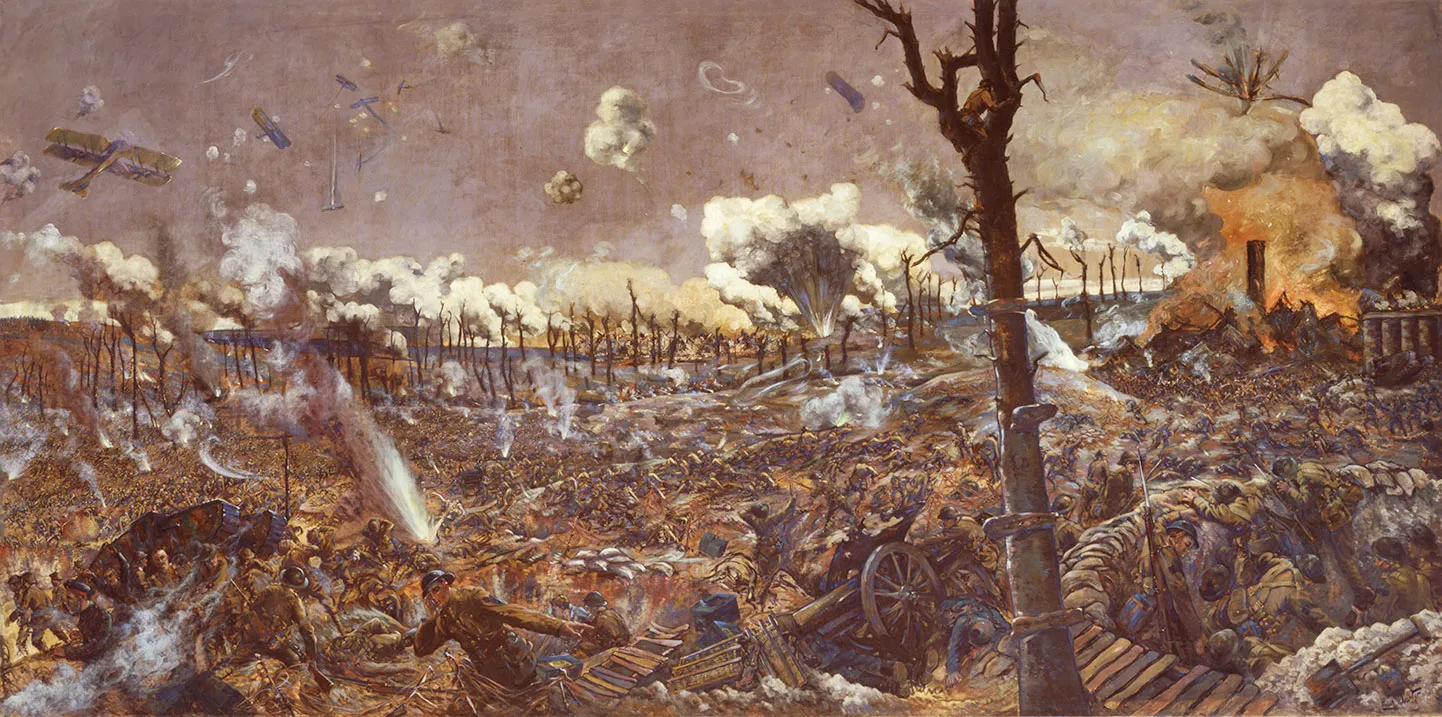
Image: “13th Bn. men having a meal outside their dug-out. December, 1917” Canada. Dept. of National Defence/Library and Archives Canada/O-2332

Otter Internment Camp, Yoho National Park B.C. 1916, Library and Archives Canada, C-081360


6 min

The internment of enemy aliens in Canada under the War Measures Act ended officially in 1920, two years after the Armistice, but its legacy remained throughout the 20th century, with further internments in the Second World War, and the use of the War Measures Act during the FLQ Crisis of the 1970s.

The Internees

0

Women

0

Children

0

Men


0

Total in camps

Civilians 65%
Legitimate POWs 35%
Detainees were defined at the time as
5,954 Austro-Hungarians (Czechs, Slovaks, Ukrainians)
2,009 Germans

205 Turks (subjects of the Ottoman Empire)

99 Bulgarians
312 Miscellaneous
At the time, the definition of “German” or “Austro-Hungarian” covered a huge swathe of people who did not necessarily define themselves as ethnically German, Austrian, or Hungarian.
"Apart from the natural irritation consequent upon a deprivation of liberty, the general disposition of prisoners was philosophical acceptance of the situation, the policy adopter being that of humane treatment throughout."

General William Otter, commander of internment operations 1914-1920 in Internment Operations 1914-1920.

85,000

The number of civilians registered as ‘Enemy Aliens’, and thus not allowed to leave the country and forced to regularly report to designated authorities.
Image
On August 15th, 1914, Parliament passed the ‘Proclamation Respecting Immigrants of German or Austro-Hungarian Nationality’ allowing for the arrest of ethnic Germans and Austrians suspected of threatening National Security. The War Measures Act received the royal seal on the 22nd of August 1914. It granted the Borden government the power to essentially rule by decree, in the form of Orders-in-Council, and to suspend civil liberties in the name of national security.
Deux prisonniers au camp d’internement de Spirit Lake, en Abitibi (Québec) [1914-1920], Library and Archives Canada, PA-170451

The Camps

At their height, there were 24 internment facilities across Canada divided into two categories.
Hover over the map to learn more

The first category, located in Montreal, Toronto, Niagara Falls, Sault-Saint-Marie, and Winnipeg, were “Receiving Stations”. Their purpose was to hold individuals until they were ready to be sent to the internment camps.

The rest of the facilities were located further north in less populated parts of British Columbia, Alberta, Ontario, and Quebec, with a few in Nova Scotia that received prisoners of war from other British colonies.

The first category, located in Montreal, Toronto, Niagara Falls, Sault-Saint-Marie, and Winnipeg, were “Receiving Stations”. Their purpose was to hold individuals until they were ready to be sent to the internment camps.

The rest of the facilities were located further north in less populated parts of British Columbia, Alberta, Ontario, and Quebec, with a few in Nova Scotia that received prisoners of war from other British colonies.

"There were [sic] an epidemic of tuberculosis in the Spirit Lake camp... There were three women interned in my family who got tuberculosis. My great-grandmother, Anna, my grandmother, Felicia, and my mother, Mary. My Grandmother died in her thirties as a result of TB."

Jerry Bayrak, a descendant of internees from Spirit Lake, Quebec
Ali, Hoosen – Subject of Turkey, certificate of release from internment camp at Kapuskasing, Ontario [1916], Library and Archives Canada, R174-59-6-E
The camps were mostly located in repurposed government buildings, military installations and two rented factories. During the summer, certain locations would use tents or train cars as shelter. Adhering the Hague Convention, internment facilities were, at least technically, as good as those offered to Canadian soldiers. However, most of these camps were located in harsh environments far from hospitals and other sanitation infrastructure, allowing diseases to flourish. Due to the harsh conditions of internment, combined with the general stress of imprisonment, 107 internees died between 1914-1920.
Ali, Hoosen – Subject of Turkey, certificate of release from internment camp at Kapuskasing, Ontario [1916], Library and Archives Canada, R174-59-6-E
The Products of Internment
To keep the prisoners busy, and to cut the cost of maintenance, various infrastructure and land development projects were worked on by the internees.
Provinces took advantage of this cheap labour, paid at half the price of Canadian-born workers, to clear and render accessible their underdeveloped hinterlands.

Forestry

Mining

Land-Clearing
"At the present time the Dominion Government has a large number of prisoners of war, whose labor it is anxious to utilize. Accordingly, arrangements are being made to set these prisoners to work at once in clearing up the land for the proposed experimental farm, so that it will be ready for cultivation next season."

“PRISONERS OF WAR TO CLEAR NEW FARM: Ontario Government Arranges for 1,000- Acre Experimental Farm in North Country, and Will Utilize Labor of Interned Alien Enemies at Once” in The Globe (December 11, 1914).

Image
These projects involved forestry, mining, land clearing for agriculture and other labour-intensive activities. Ontario expanded agricultural land to the West, British Columbia developed roads into the Rocky Mountains, and Quebec attempted to develop the Abitibi region. A golf course in Banff National Park was completed using interned labour.
Otter Internment Camp, Yoho National Park B.C. 1916, Library and Archives Canada, C-081360
By 1916, labour shortages became so acute that the Canadian Government sent internees to work in factories, resulting in 75% of the camps being shut down, including one of the largest in Spirit Lake, Quebec. These Enemy Aliens were released, usually to work in mines or in the railroad industry, provided they sign a parole document demanding loyalty, adherence to the law, and periodical reports to the nearest police authority.
Public Perception
Popular perception of internment was mixed but generally positive. Ethnic tensions inspired by xenophobia, the economic downturn of 1913-1914, and a fear of German-American attacks from across the border in Fenian-style raids, as well as war hysteria contributed to this sentiment.

The press further inflamed these tensions, by displaying daily stories of ‘mouthy Germans’, terrorist plots, and spy rings.

Harry Lauder’s Story, This is ‘Kultur’ [1914-1918] Library and Archives Canada
Acc. No. 1983-28-44

"Alien Rioters Given Quietus: Prisoners Rebel at Doing Chores at Kapuskasing Internment Camp"
Headline from the Toronto Daily News, May 16, 1916
Boches / dessins de J. Charlebois [1915], Hartland Molson Library Collection, The Canadian War Museum, REF PAM D 526.25 C2 C48 1915
However, Canada was not entirely unified in this xenophobic stance. Some journalists testified to the hard work that most of the ‘enemy aliens’ had done in developing Canada prior to the War and called out the injustice of punishing individuals on the basis of their country of origin.
Boches / dessins de J. Charlebois [1915], Hartland Molson Library Collection, The Canadian War Museum, REF PAM D 526.25 C2 C48 1915
"In striking contrast with the contention that Canadians are fighting for freedom, democracy and the observance of national obligations, is the mean and unworthy spirit of persecution displayed towards the so-called “alien enemies” who are quietly attending to their own business here. These people are here on our invitation."
Phillips Thompson, “Alien Enemies” in The Globe (March 29, 1918) ​
The government was not entirely invested in maintaining the camps. Their preoccupation was often with keeping costs down and making sure that perceptions of the camps did not result in harsher treatment for Canadians held as POWs abroad.
The Legacy of Internment
As the war drew to a close, internment camps assumed distinctly political functions, while declining support for the revolution in Russia heightened the Canadian government’s concern about radicals within its midst.
They Menace Canada on Both Coasts. Come on Canada! Get Ready to Buy the New Victory Bonds [1942], Library and Archives Canada, Acc. No. 1983-30-761

Communists and labour union leaders were rounded up under the War Measures Act and union publications were censored. Many of these individuals, along with the few ‘Enemy Aliens’ still interned, would be deported to Europe in 1920, often arriving in countries ravaged by war, revolution, or both.

Grade Four Report Card; Tashme Internment Camp, BC [1944], Akira Kawai Collection, Nikkei National Museum, 2013.58.2. 1.a-b

Internment returned during the Second World War when over 24,000 people would be interned under the War Measures Act, this time in 40 camps, including roughly 22,000 Japanese-Canadians. The powers of the War Measures Act were again used to silence political dissidents—communists, socialists, and those advocating for labour unions.

"Naturally, I am not particularly bent on remaining here in Canada, where I was treated so unfriendly. I rather wish to return to the United States... With them I am sure to be welcome."
Edward Midgard, on his outrage with Canada for being deemed an enemy alien, 1919.
In 1970, the War Measures Act was invoked again, in response to kidnappings by the Front de libération du Quebec (FLQ). This resulted in mass imprisonment and the military occupation of Montreal. During this period 3,000 searches were conducted, 497 people were arrested, and 435 were released without charges.
The War Measures Act was overturned in 1988 and replaced with the less dictatorial Emergencies Act. Canada has tried to accept responsibility for some of the internments that were the result of the Act, including apologies to the Japanese and Italian communities, and a significant compensation commitment to the Ukrainian community in 2008. 
Acknowledgements

On 25 November 2005 MP Inky Mark’s private member’s Bill C-331, Internment of Persons of Ukrainian Origin Recognition Act, received Royal Assent.

Following negotiations with the Ukrainian Canadian Civil Liberties Association, the Ukrainian Canadian Congress, and the Ukrainian Canadian Foundation of Taras Shevchenko, the Government of Canada established the Canadian First World War Internment Recognition Fund on 9 May 2008 to support commemorative and educational initiatives that recall what happened to Ukrainians and other Europeans during Canada’s first national internment operations of 1914-1920.

This project has been made possible by a grant from the Endowment Council of the Canadian First World War Internment Recognition Fund.

Support Us

Enjoying our Digital Exhibitions?

Consider making a donation today to help us continue producing educational content like this.

Donate