Forget-Us-Not
TRAVELLING EXHIBITION
Are you seeing this exhibition in person?
Click here to access exclusive digital content only.
Remembrance in the Wake of the First World War
Forget-Us-Not explores the diverse ways Canadians commemorate the Great War. It traces how collective memory is preserved, passed down, and reinterpreted across generations, offering a reflection on both the past and the contemporary relevance of remembrance.
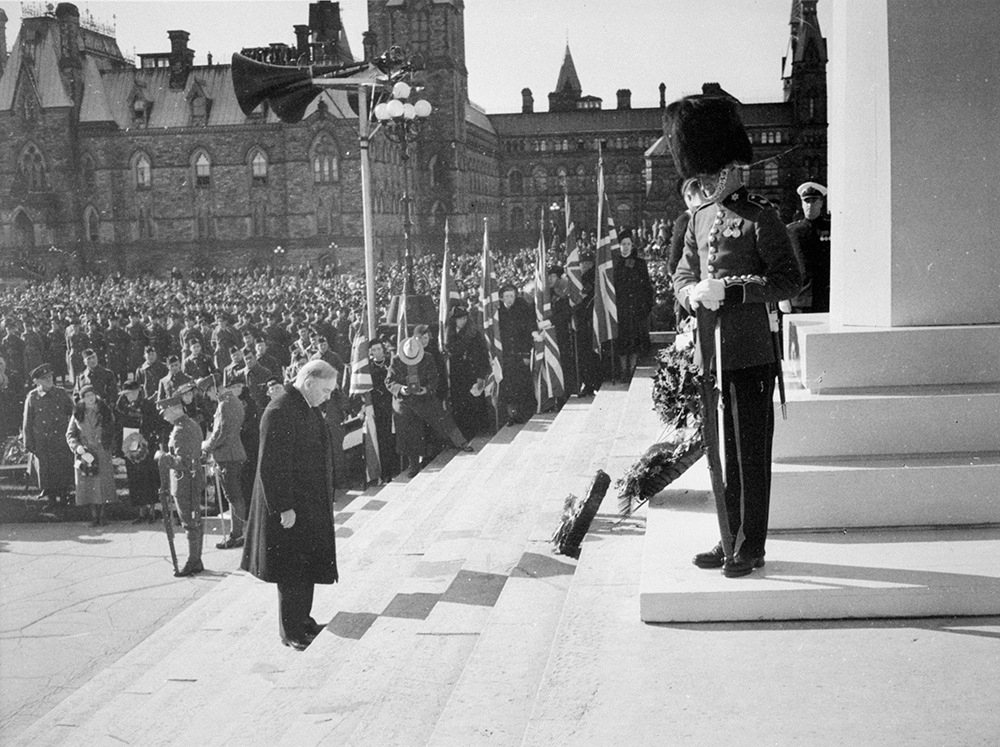
Rt. Hon. W.L. Mackenzie King laying a wreath during Remembrance Day service on Parliament Hill. 11 Nov. 1937. / Library and Archives Canada / PA-127563
The Origins of Canadian Remembrance Rites
After Canada’s first military victory in the South African War (1899-1902), communities nationwide celebrated Paardeberg Day on 27 February, gathering in public squares and holding parades. However, the unparalleled atrocities of the Great War transformed how Canadians would remember their fallen. What had once been celebratory occasions gave way to solemn reflections, honouring over 66,000 Canadians who lost their lives in combat. Remembrance Day became anchored in the fabric of Canadian society through the development of key rites and rituals that came to define this historic day.
Beyond Flanders Fields
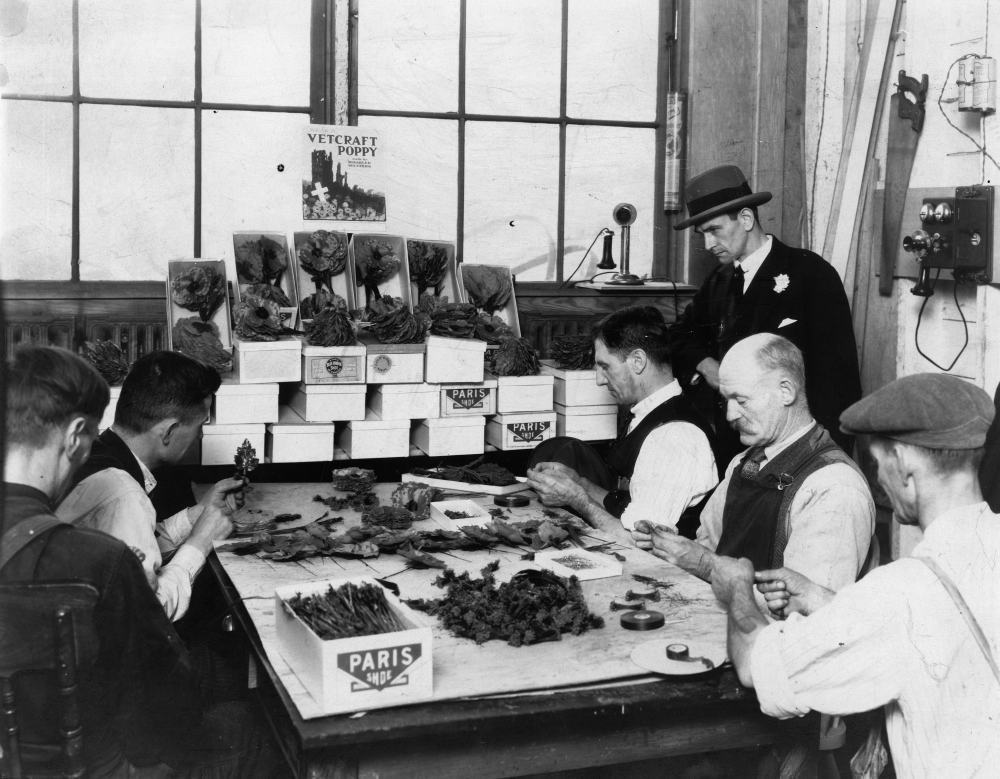
Veterans making poppies. 192-?
Major Matthews Collection / City of Vancouver Archives / CVA-371-39
Growing abundantly on the battlefields of Flanders, the poppy became immortalized as a symbol of remembrance through Lieutenant-Colonel John McCrae’s poem "In Flanders Fields." Inspired by the poem, American Moina Michael began wearing the poppy year-round to honor the war dead, and in 1920, Frenchwoman Anna Guérin suggested creating artificial poppies to raise funds for veterans and those in need.
Armistice Day 1921 marked the first occasion of wearing poppies, and by the following year, they began being produced by veterans in Canada. Since 1925, the Royal Canadian Legion has overseen the poppy fundraising campaign across Canada, ensuring its enduring role as a symbol of remembrance while providing financial support to veterans and their families.
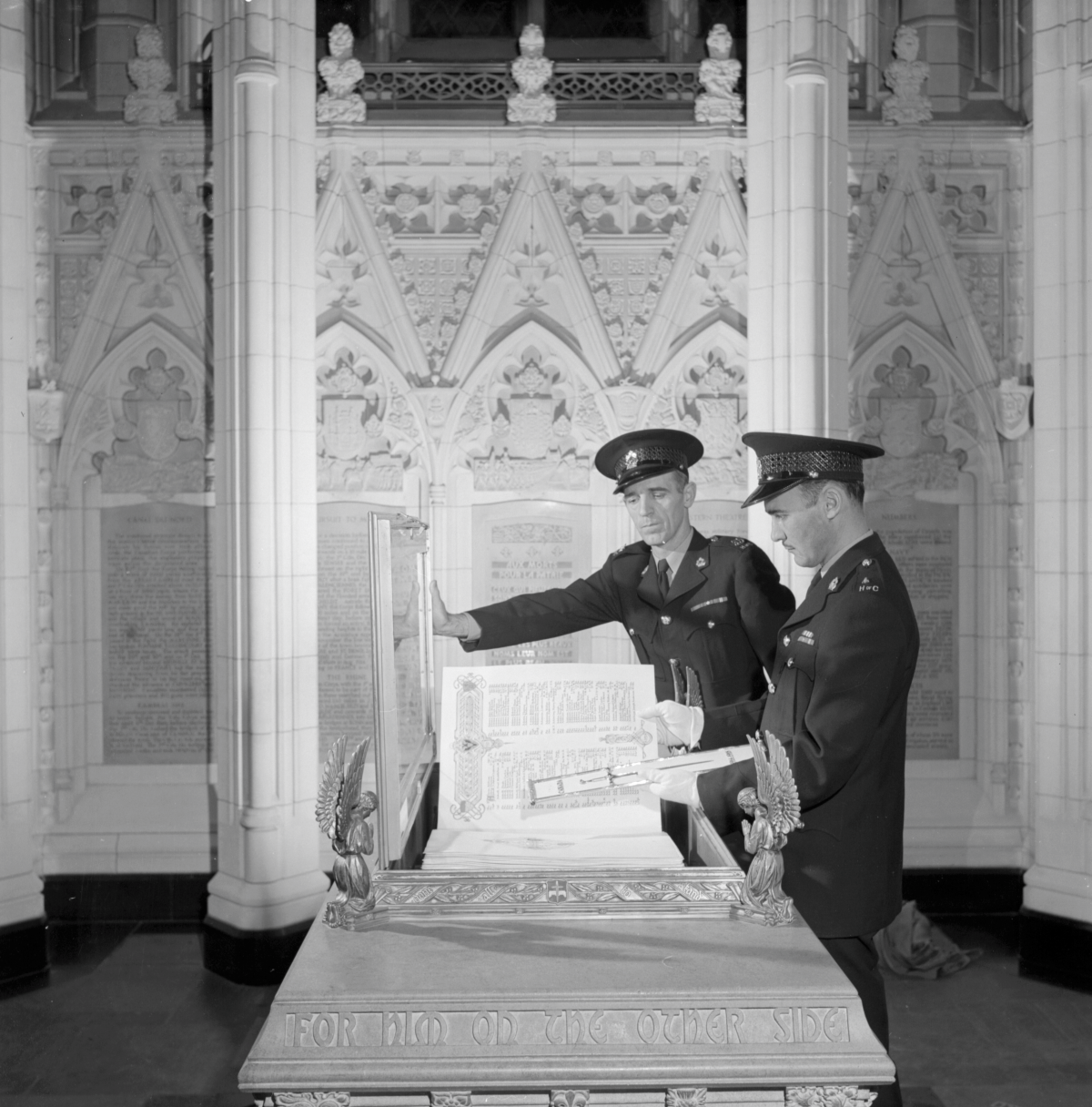
Did you know?
King George V
The Road to Remembrance Day
April 1919
MP Isaac Pedlow introduces "Armistice Day"
11 November
1919 & 1920
Canadians commemorate Armistice Day on 11 November
18 March 1931
MP A.W. Neil introduces motion to have Armistice Day observed on 11 November and “on no other date”
1970 & 1985
The Holidays Act of 1970 and 1985 recognized it as a national holiday
11 Nov 1918
6 November 1919
King George V urges that it take place at 11 am on November 11, with two minutes of silence
May 1921
Act of Canada’s Parliament declares Armistice Day would be held on the Monday nearest to 11 November; coincides with Thanksgiving
11 November 1931
First "Remembrance Day" as MP C.W. Dickie moved to change the
name from
Armistice Day to
Remembrance Day
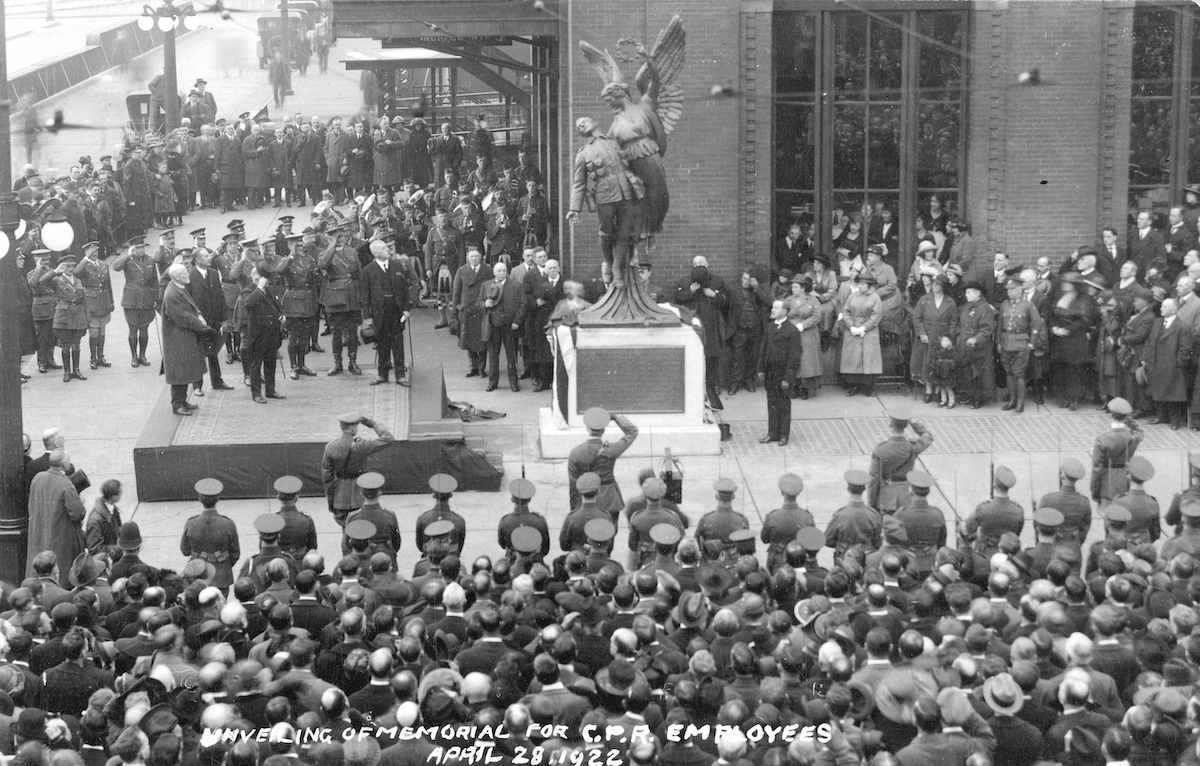
Unveiling of memorial for C.P.R Employees April 28, 1922. / Major Matthews Collection / City of Vancouver Archives / Mon P100
A Grieving Nation
Collective Mourning
& the Built Environment
Cenotaphs, memorials, and monuments commemorating those who died in the Great War stand in communities across Canada, shaping the national landscape. These monuments serve as enduring expressions of remembrance, preserving collective memory across generations. Ranging from national symbols like the National War Memorial in Ottawa to monuments honouring specific communities, they reflect the need to grieve both collectively and locally.
Angel of Victory
Sculpted by Coeur de Lion McCarthy, the Angel of Victory was installed at Montreal’s Windsor Station in 1922. It commemorates the 1,116 Canadian Pacific Railway employees who died in the First World War. Depicting a fallen soldier held by an angel, the bronze sculpture conveys themes of sacrifice, urging viewers to reflect on the cost of war. Replicas were later installed at CPR stations in Vancouver and Winnipeg, extending its commemorative reach.
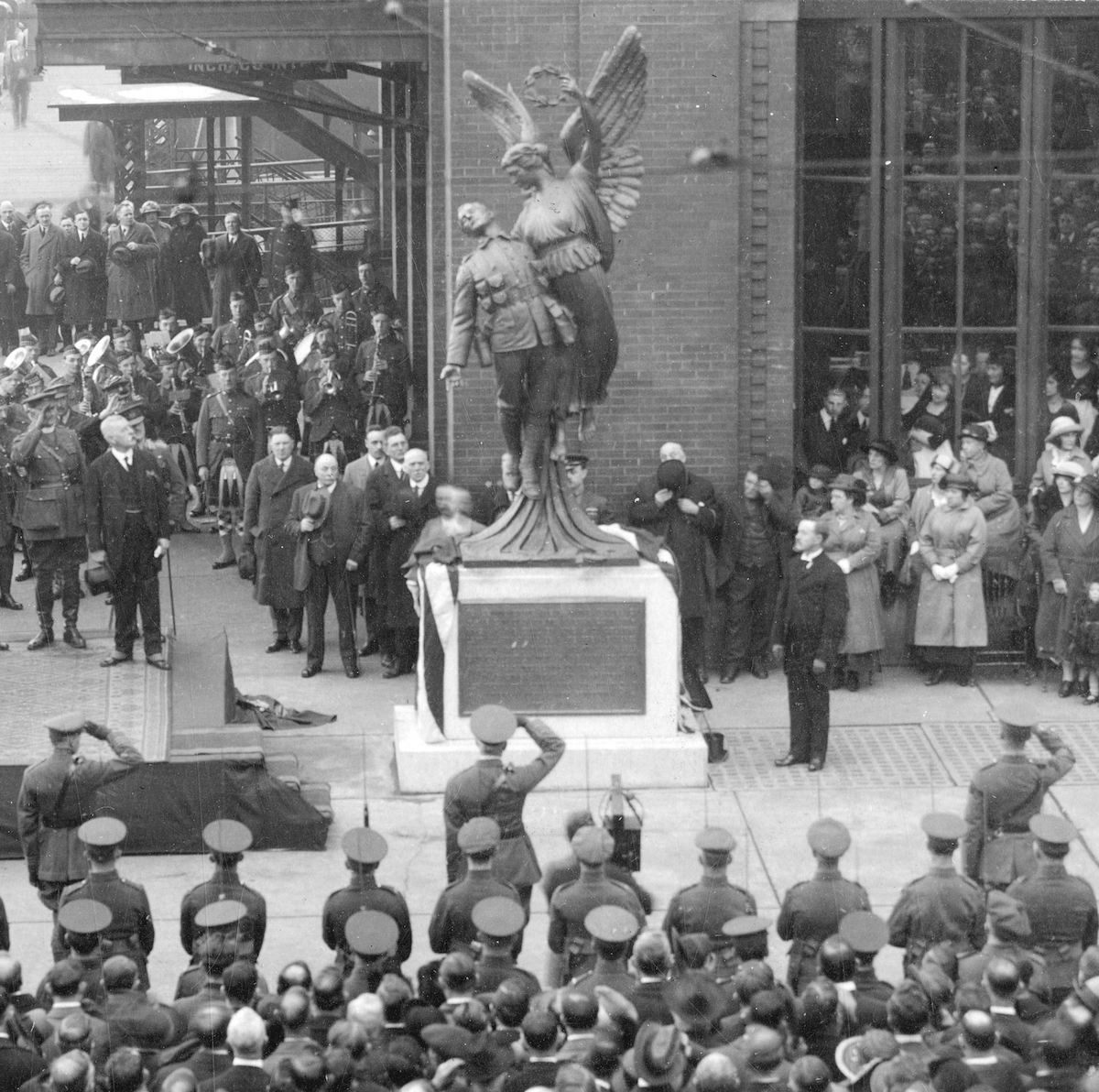
"To commemorate those in the service of the Canadian Pacific Railway company who at the call of king and country, left all that was dear to them, endured hardship, faced danger and finally passed out of sight of men by the path of duty and self sacrifice, giving up their own lives that others may live in freedom. Let those who come after see to it that their names are not forgotten."
Plaque inscription
Japanese Canadian War Memorial
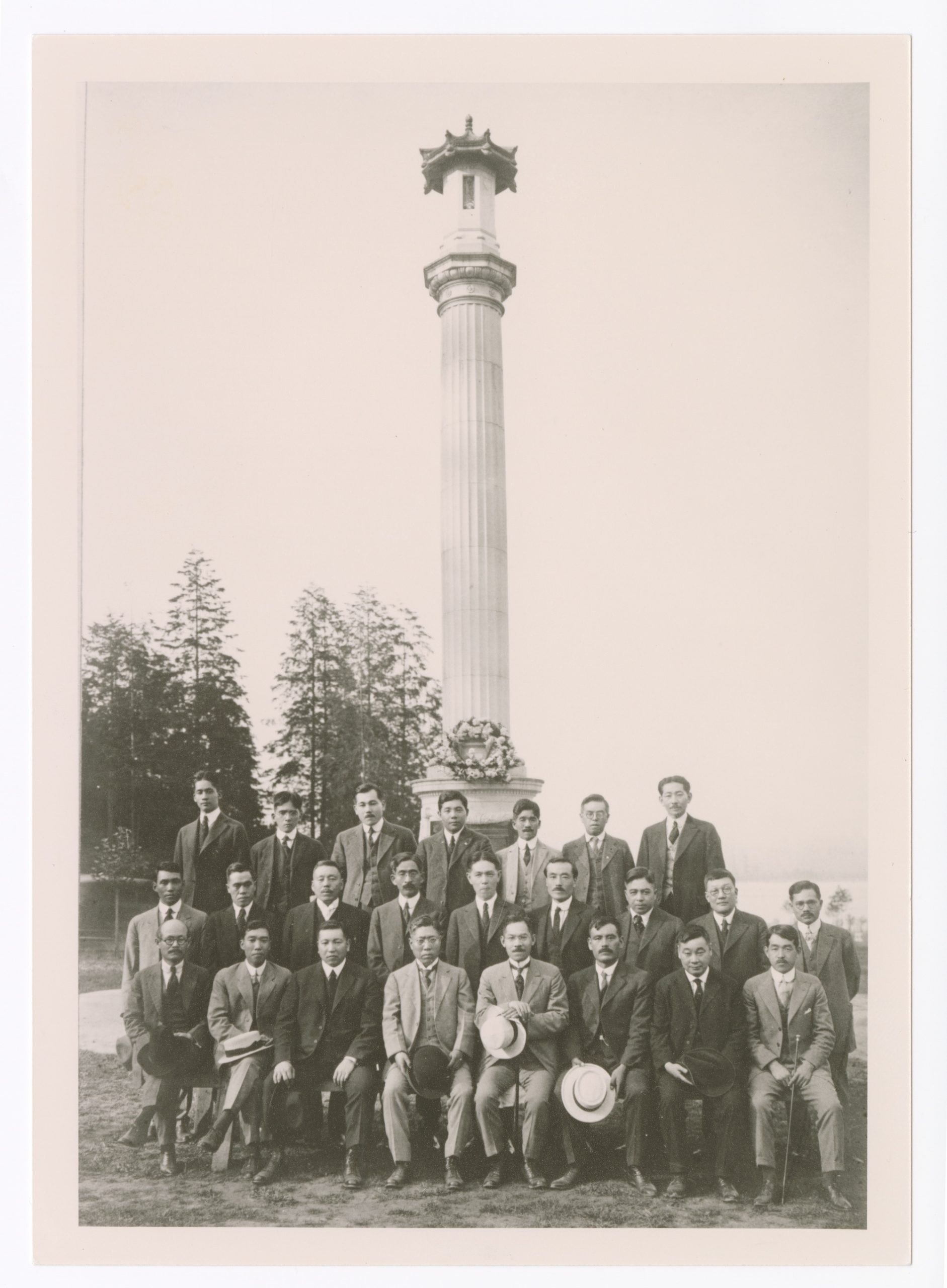
Founding Group of Canadian Japanese Association at the Japanese Canadian War Memorial. Stanley Park, / Vancouver, BC. c. 1920. / Nikkei National Museum / NNM 1994.41.14
The memorial is topped by a Japanese lantern symbolizing relations between Canada and Japan. During the Second World War, rising tensions between the two countries led to the lantern being extinguished. It remained unlit until 2 August 1985, when Sergeant Masumi Mitsui, a 98-year-old First World War veteran who fought at Vimy Ridge and Hill 70, relit it. Today, the memorial stands as a reminder of both the contributions of Japanese Canadians during the war and the discrimination they faced in its aftermath.
Designed by James Anderson Benzie, the Japanese Canadian War Memorial stands in Stanley Park, Vancouver. Dedicated on 9 April 1920, the third anniversary of the Battle of Vimy Ridge, it honours Japanese Canadian men who served, including 54 who were killed in battle and 168 who returned home to Canada.
“Let us never forget the solemn truth that the nation is not constituted of the living alone.”
Sir Robert Borden, 8th Prime Minister of Canada
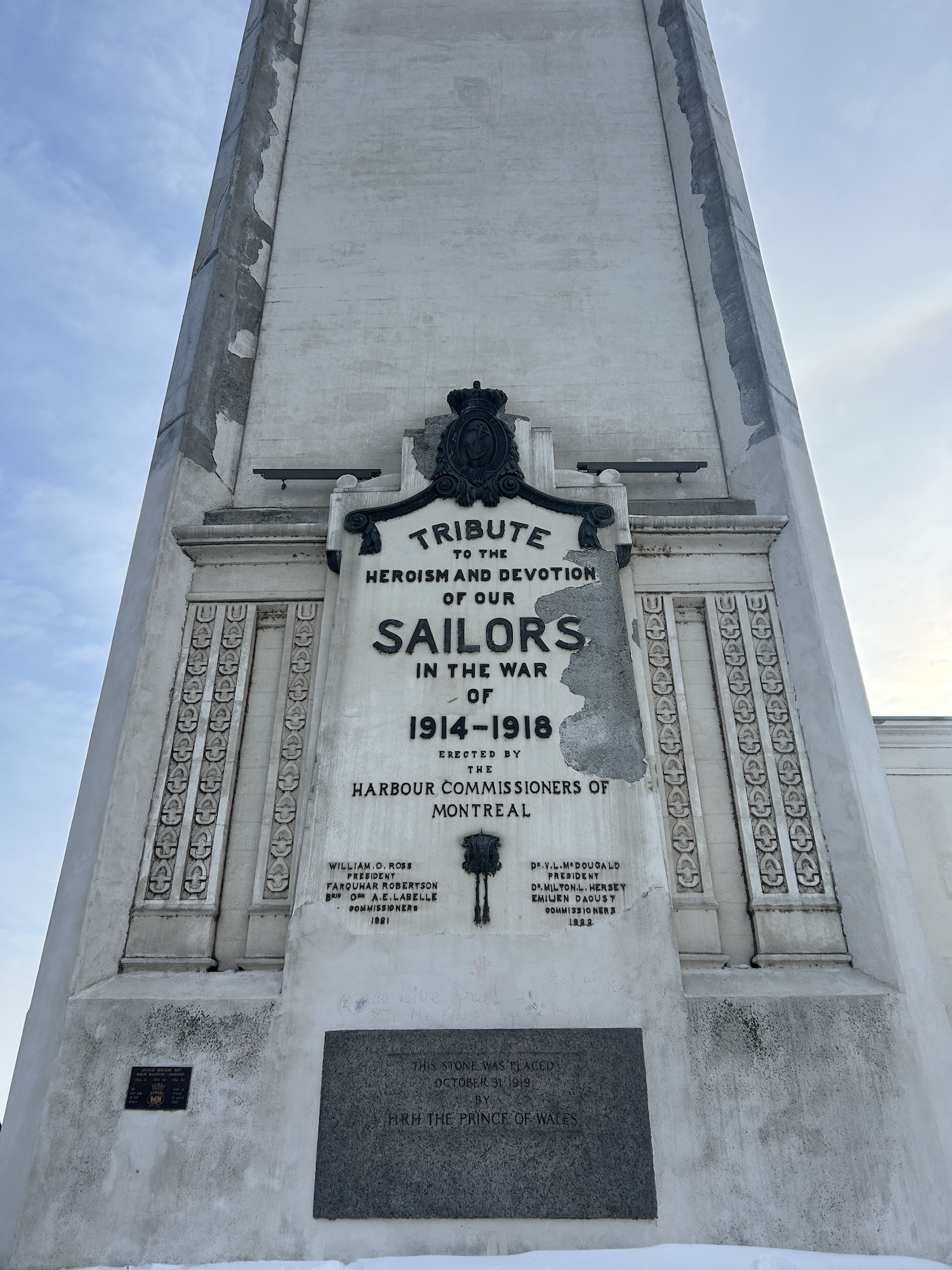
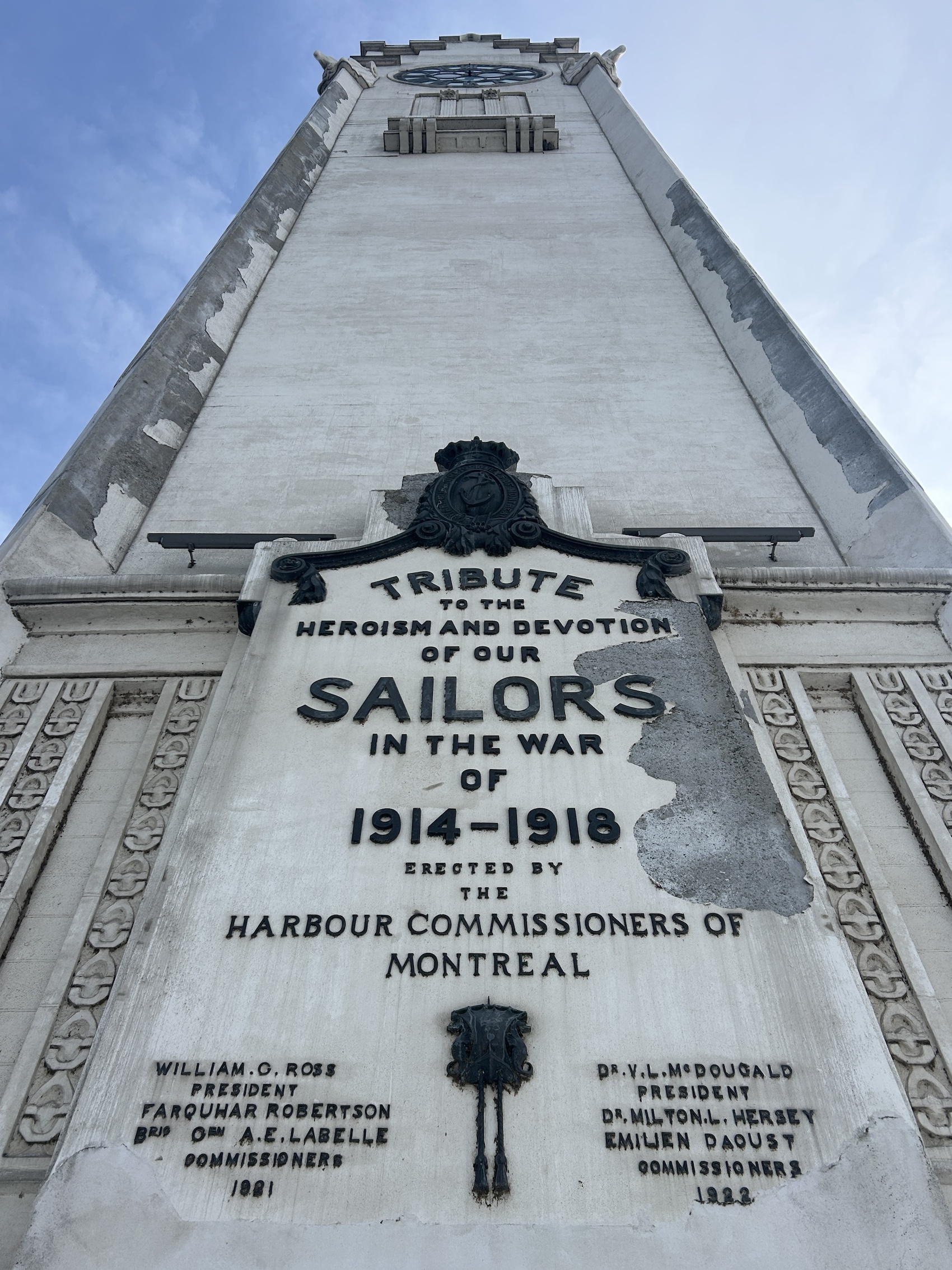
Montreal Clock Tower
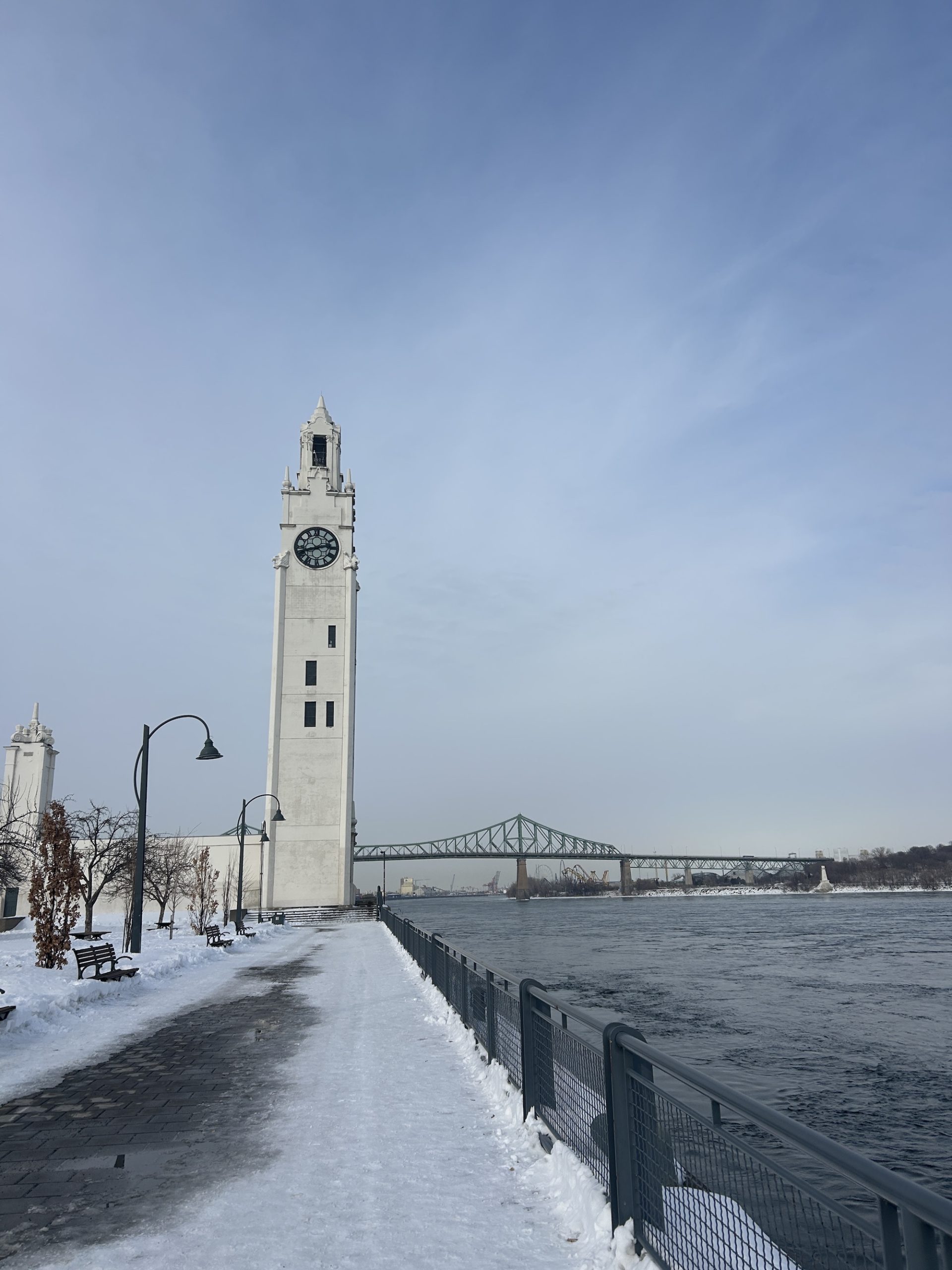
Montreal Clock Tower (Sailor's Memorial Clock) / Photos taken by Canadian Centre for the Great War
In 1922, Montreal saw the erection of a permanent landmark dedicated to sailors who served in the First World War. Designed by Montreal engineer Paul Leclair, the Montreal Clock Tower, also known as the Sailor's Memorial Clock, stands 45 m (148 ft) tall and features a clock mechanism devised by engineering firm Gillett & Johnston. Still operational today, the clock is carefully maintained and adjusted by the tower’s custodian. This ongoing care reflects a continuous commitment to preserving physical structures honoring the fallen all while demonstrating a profound understanding of the role of time in relation to memory and remembrance.
After the Second World War, many First World War monuments, including the Memorial Clock, were updated to honour those who served in later conflicts, illustrating the pivotal role of the Great War in shaping remembrance practices.
Verdun Victory Memorial & Jane Leavitt
Designed by Coeur de Lion McCarthy, the Verdun Victory Memorial honours residents of Verdun, Quebec, who lost their lives in the conflict.
In the interwar period, selecting mothers and widows to unveil memorials became a deliberate practice, making the ceremonies symbolically charged. Jane Leavitt, later remembered as the “Mother of Verdun,” was selected to unveil the memorial on 5 October 1924, representing 2,500 local mothers whose sons had gone to the front. Her own five sons—Frank, Albert, Harry, Arthur, and William—served with the Canadian Expeditionary Force, and the latter three were killed in action.
The unveiling drew a crowd of 25,000 people, demonstrating the community’s need for collective mourning. Jane Leavitt’s lasting recognition underscores the role of ritual activation, transforming bronze and stone into a tangible form of a community’s shared grief.
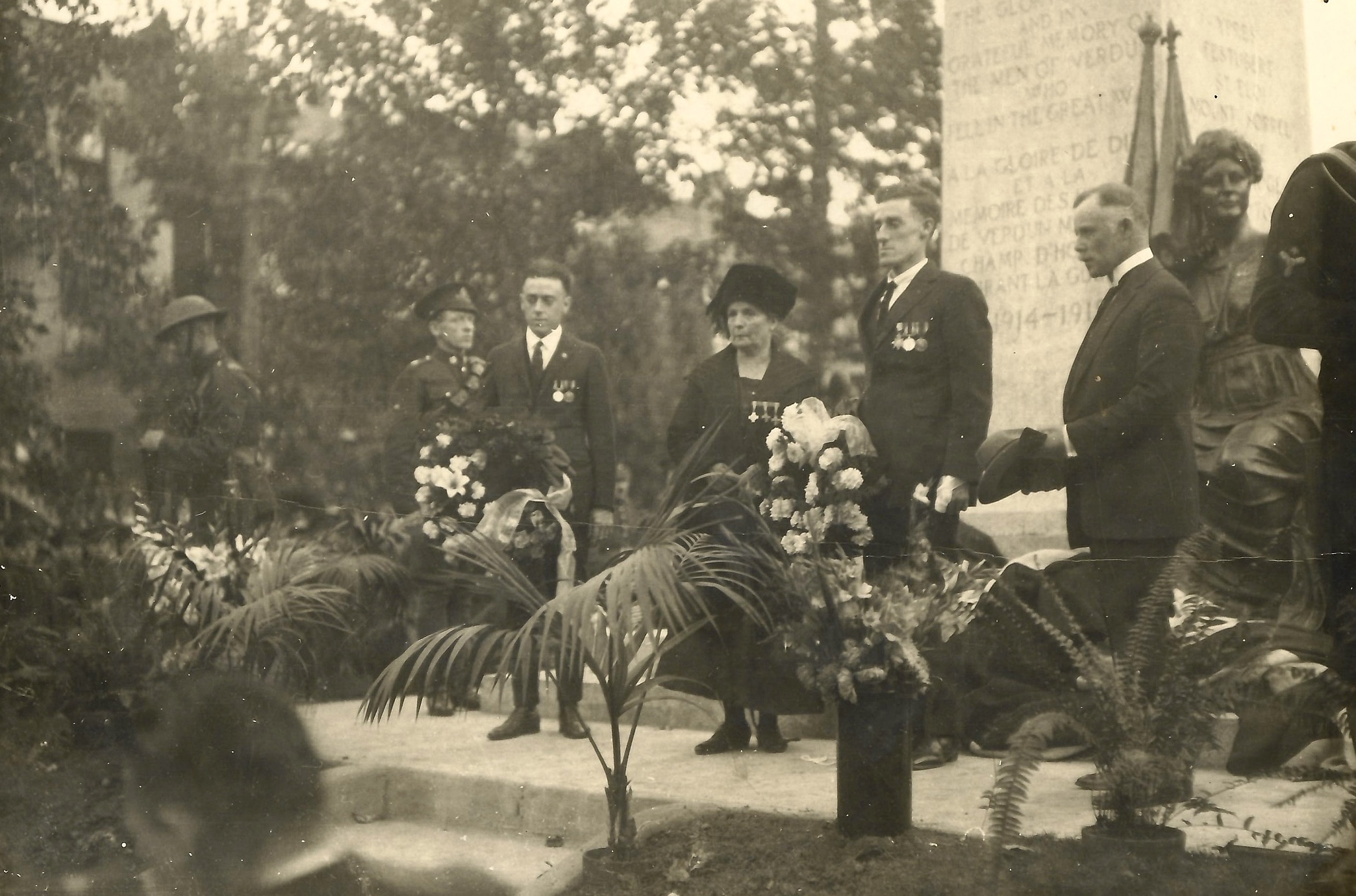
Photograph of the unveiling of the Verdun Victory Memorial featuring Jane Leavitt and surviving sons Frank and Albert.
Verdun, Québec, 1924. / CCGW Collection / 2026.02 / Gift of Richard Vincent, grandson of Frank Leavitt
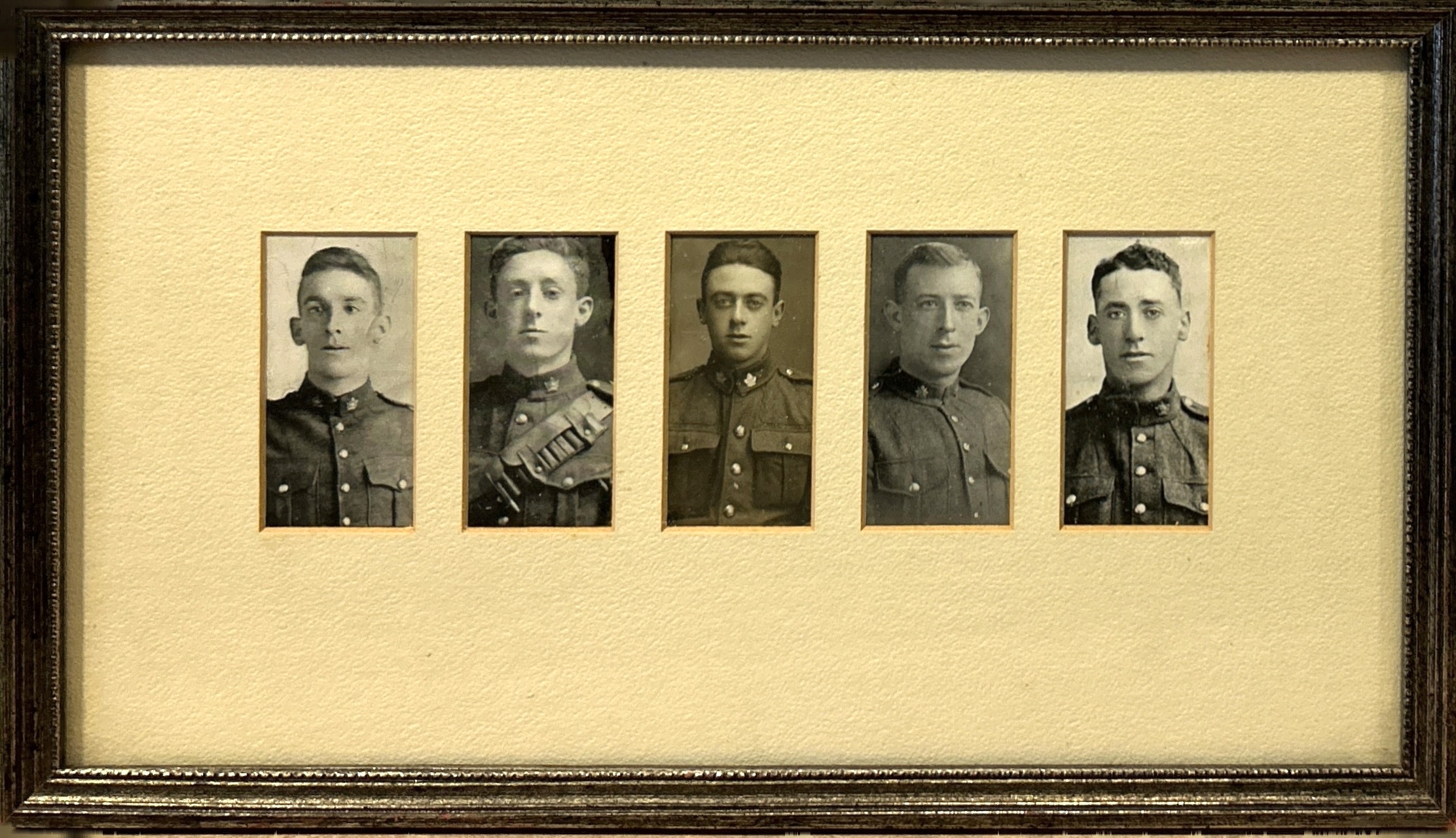
Framed photographs of five Leavitt sons. From left to right: Arthur †, Albert, Frank, Harry †, William †
CCGW Collection / 2026.02 / Gift of Richard Vincent, grandson of Frank Leavitt
Farewell, Brothers
Keepsakes from the Battlefield
During the First World War, soldiers mourned their comrades on the battlefield. Before the establishment of permanent war cemeteries, graves were identified by fellow soldiers with simple wooden temporary markers. Meanwhile, letters were sent back home, assuring families that their loved ones were not forgotten by those who had served beside them.
These early acts of remembrance were shaped by loss, friendship, and the need to remember in the midst of the conflict. After the war, remembrance among comrades continued through various organizations. At reunions, stories were shared, names were spoken aloud, and bonds formed in wartime were carried forward into peace.
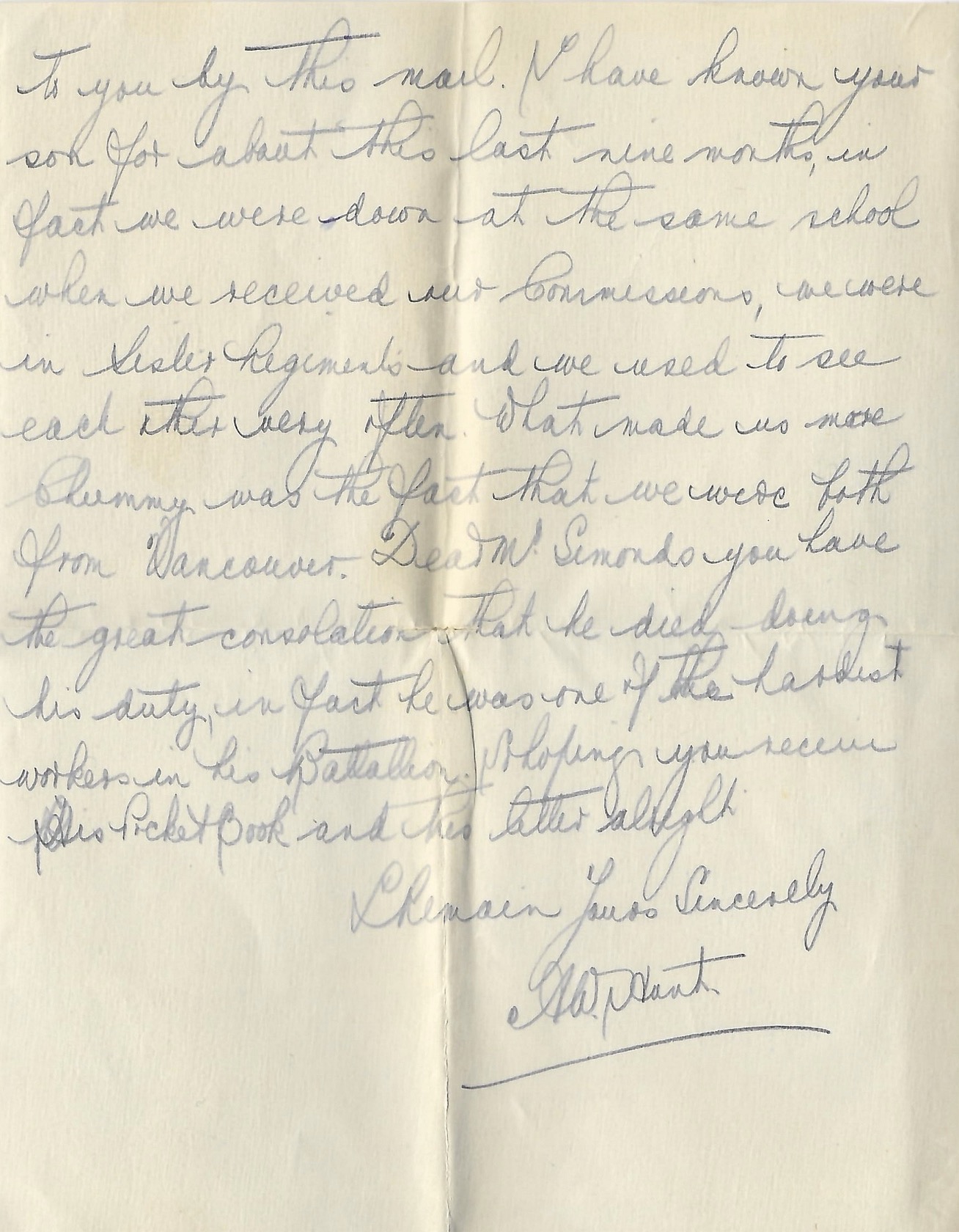
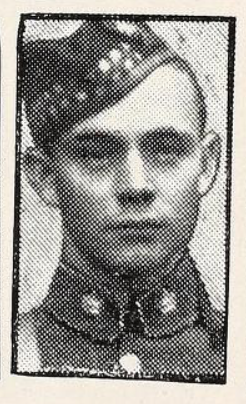
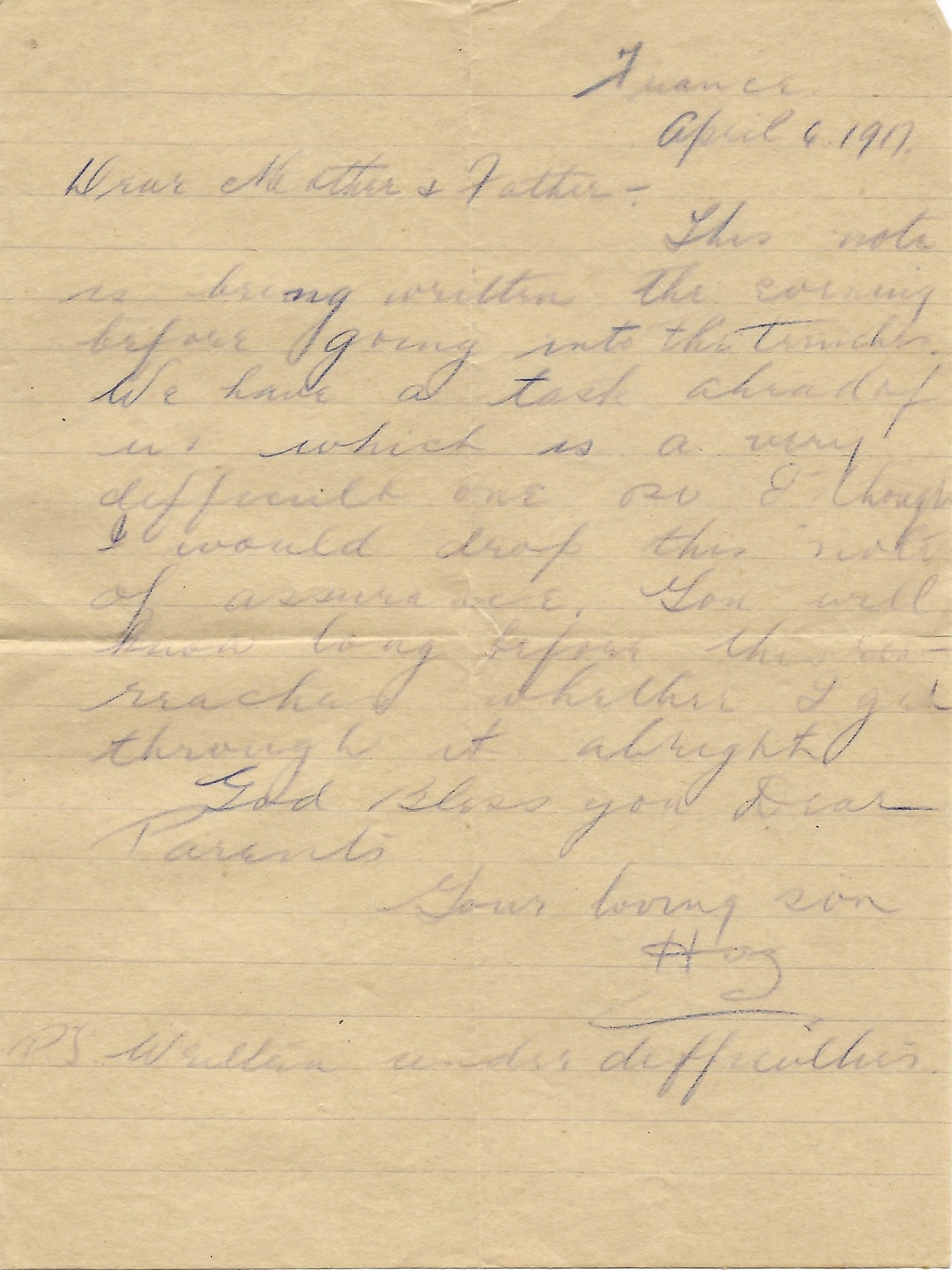
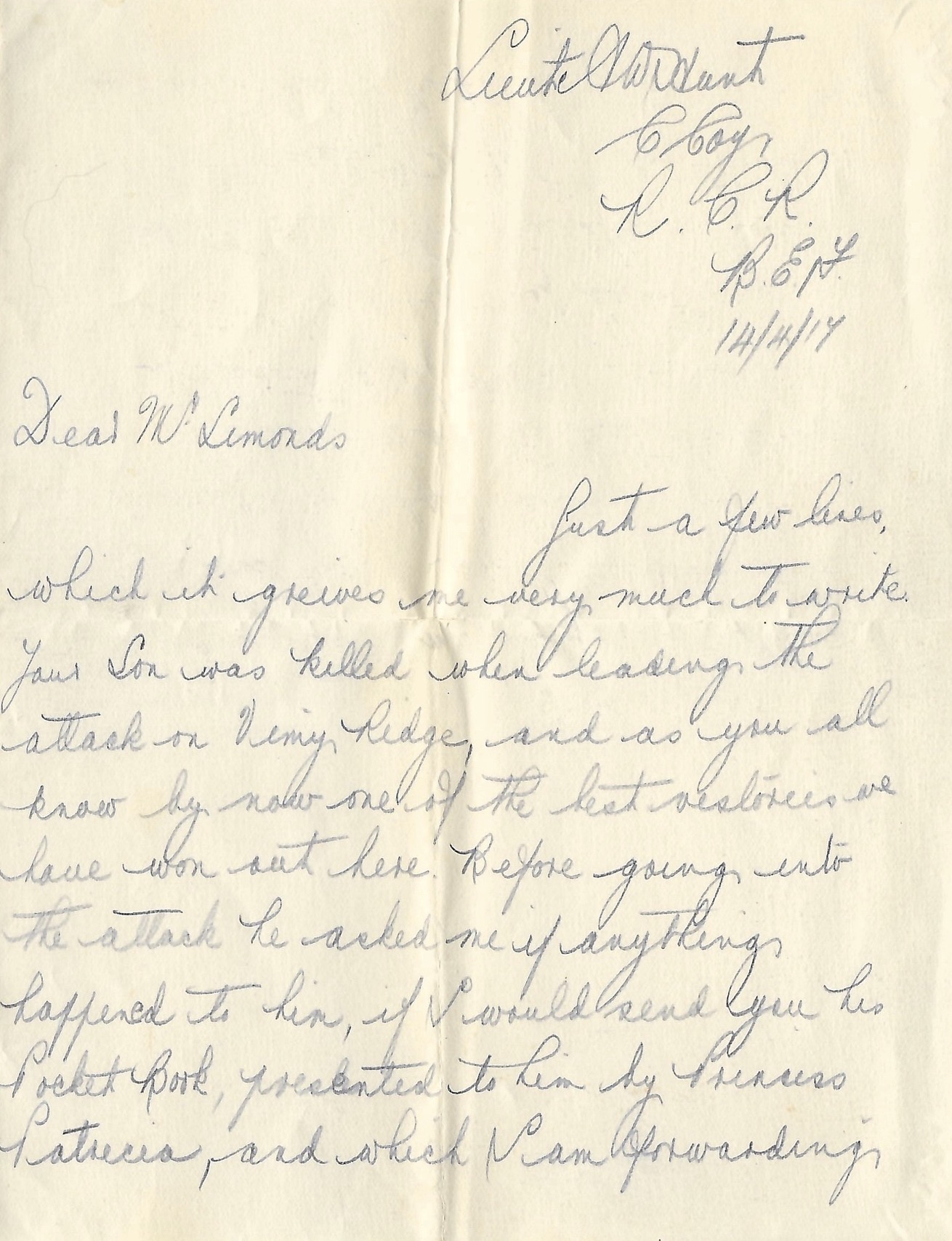
Robert Hazelette Simonds
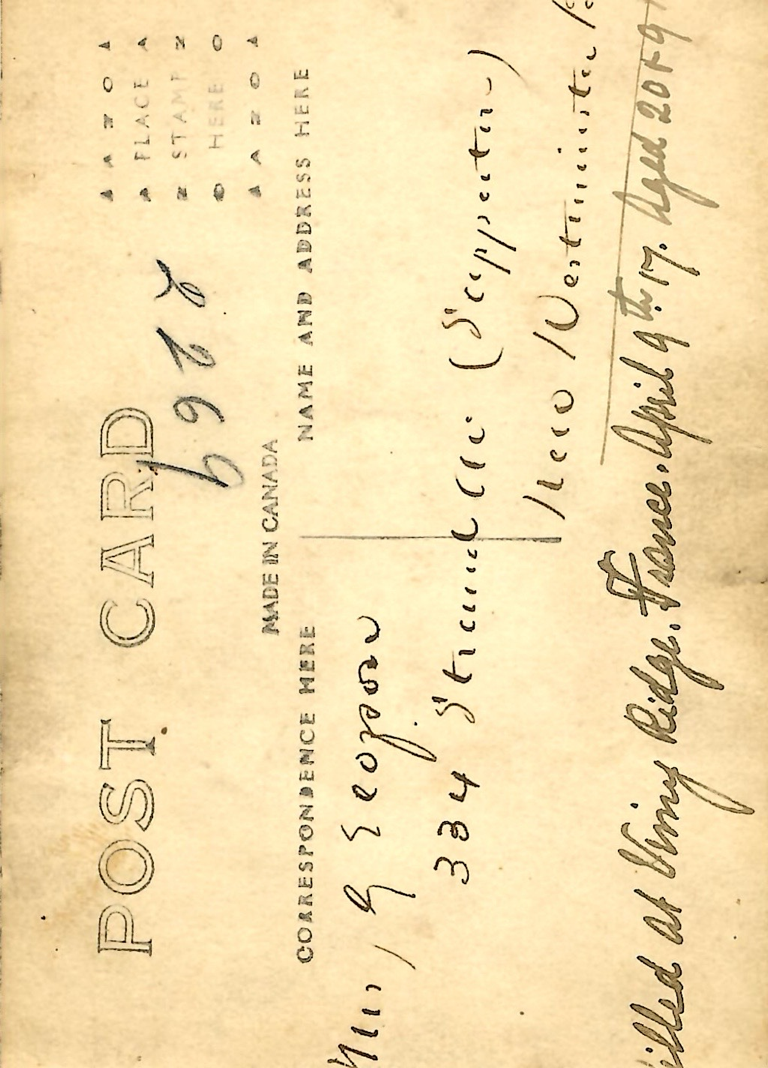
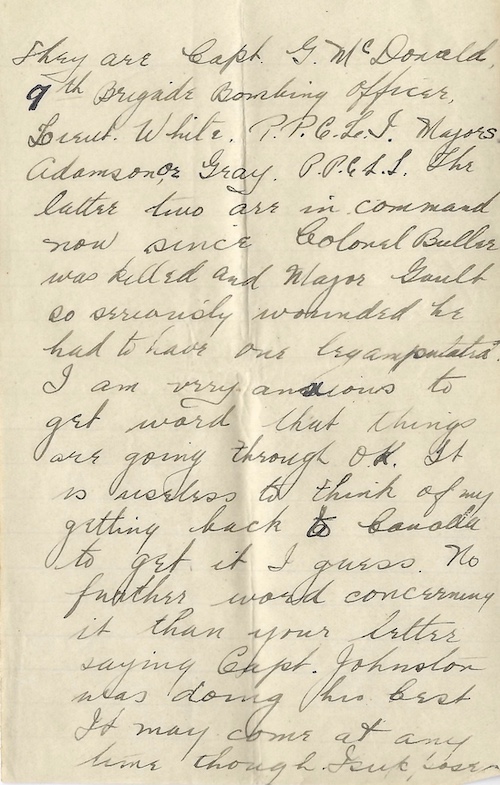
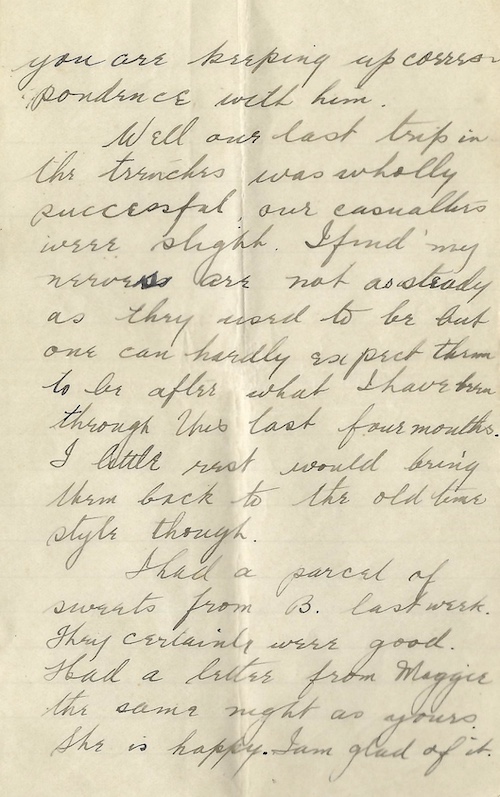
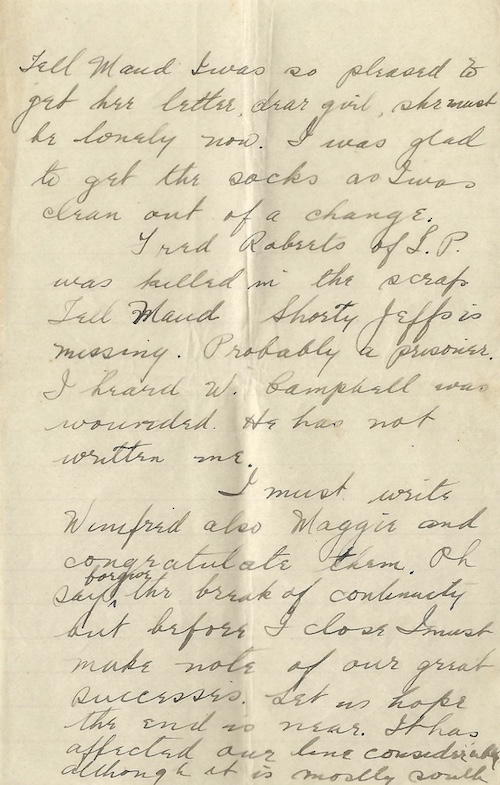
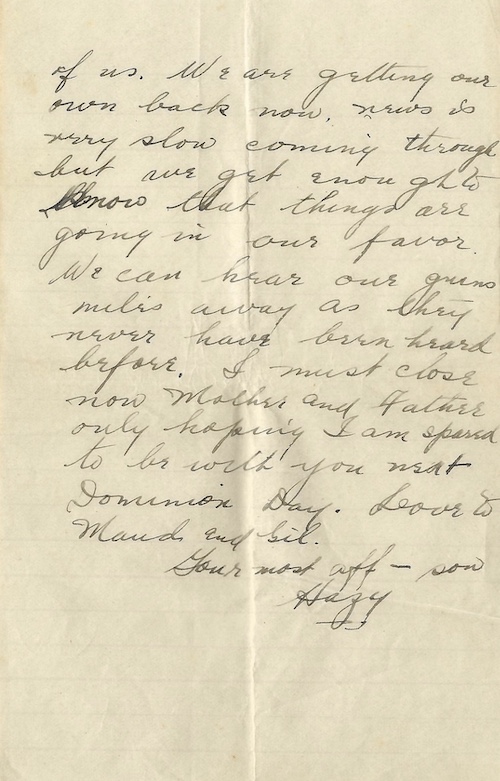
Born on 9 July 1896 in Murrayville, British Columbia, Robert Hazelette Simonds was a student at the McGill University College of British Columbia before enlisting in Vancouver on 17 March 1915 at the age of 19. Initially a private assigned to the 38th Battalion, he was promoted to lieutenant and became part of Princess Patricia's Canadian Light Infantry on 31 December 1916. His many surviving letters offer a detailed window into the lives of soldiers at the front.
Robert, known affectionately as “Haz” and “Hazy,” was killed in action on 9 April 1917, during the Battle of Vimy Ridge. He was 20 years old.
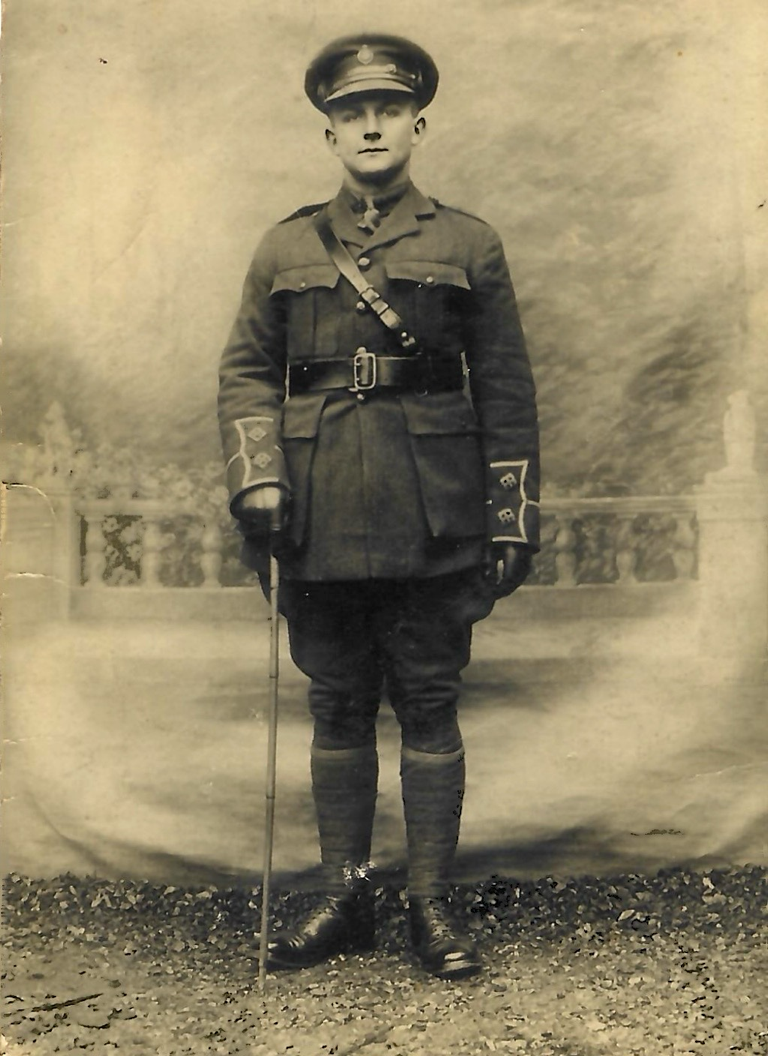
Lieutenant Robert Hazelette Simonds / CCGW Collection / 2023.02 / Gift of Mark Donahue
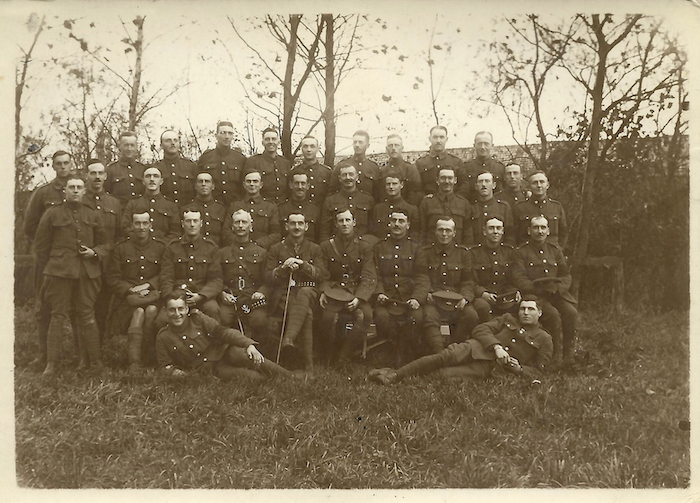
Lieutenant Robert Hazelette Simonds, second row last on the right.
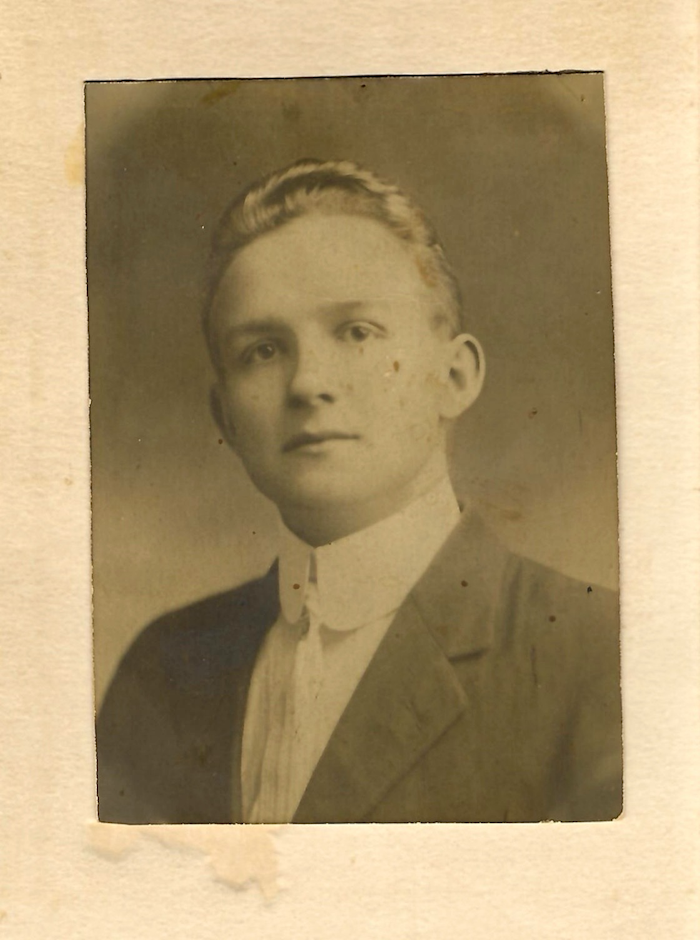
Portrait of Lieutenant
Robert Hazelette Simonds
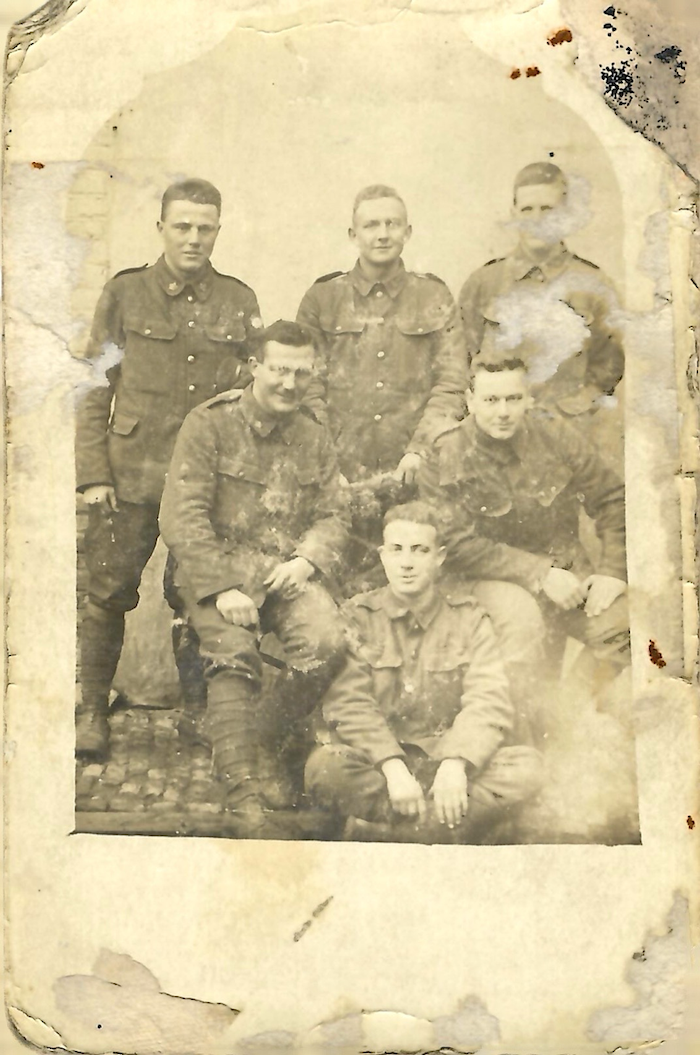
Lieutenant Robert Hazelette Simonds
in the center
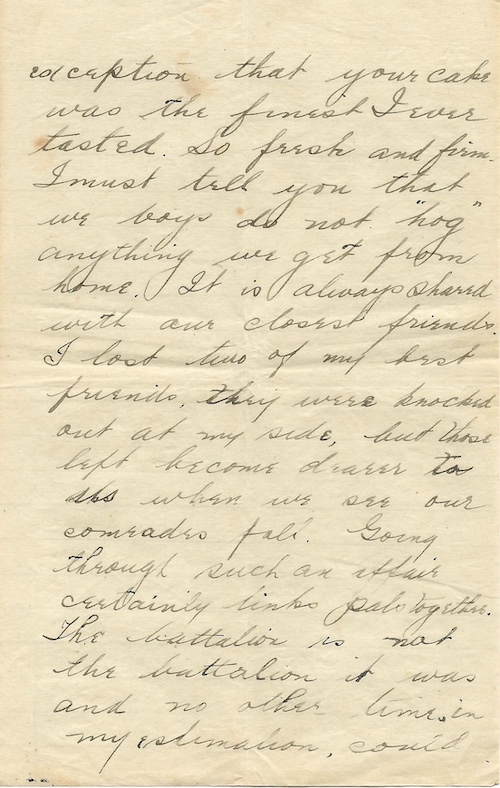
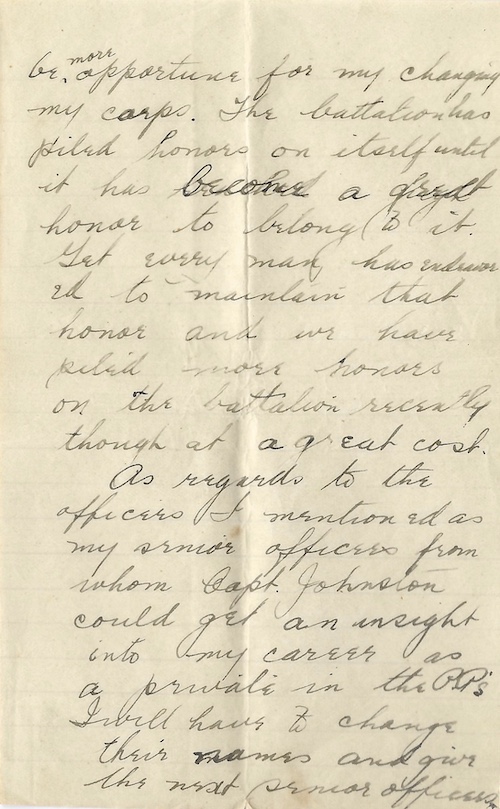
Letters of Robert Hazelette Simonds
1 July 1916
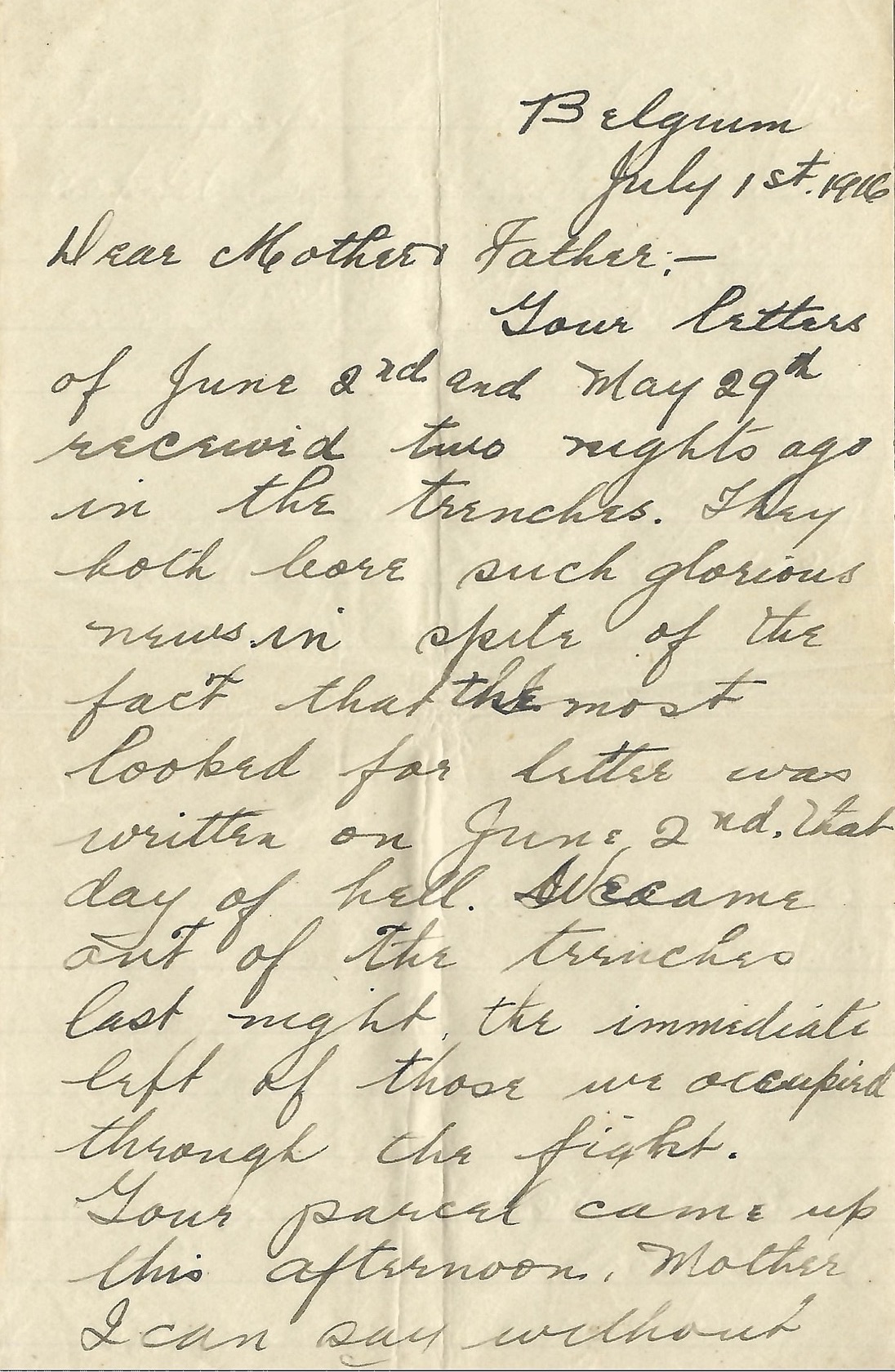
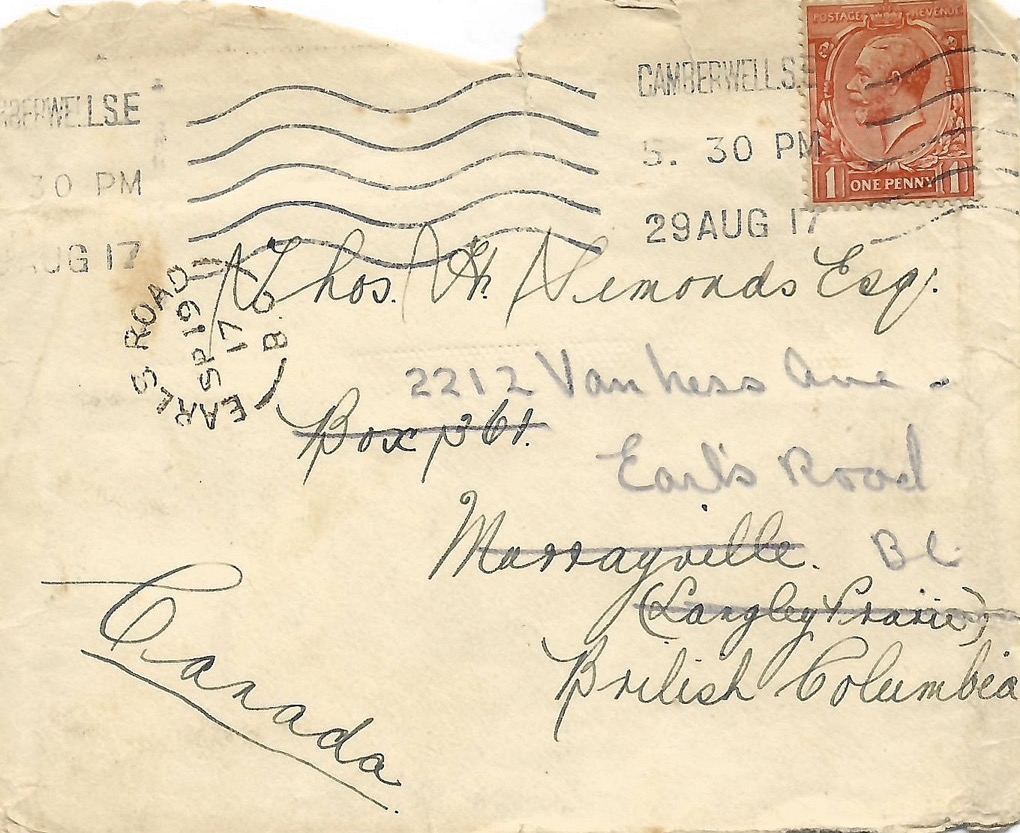
6 April 1917
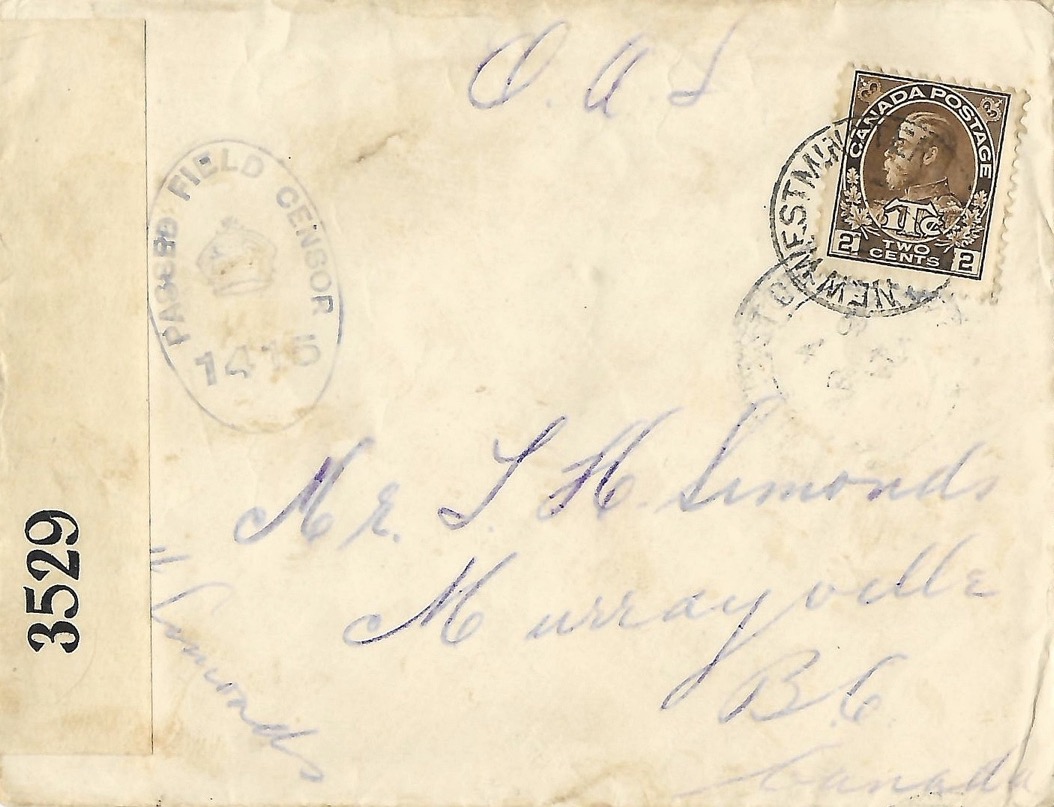
14 April 1917
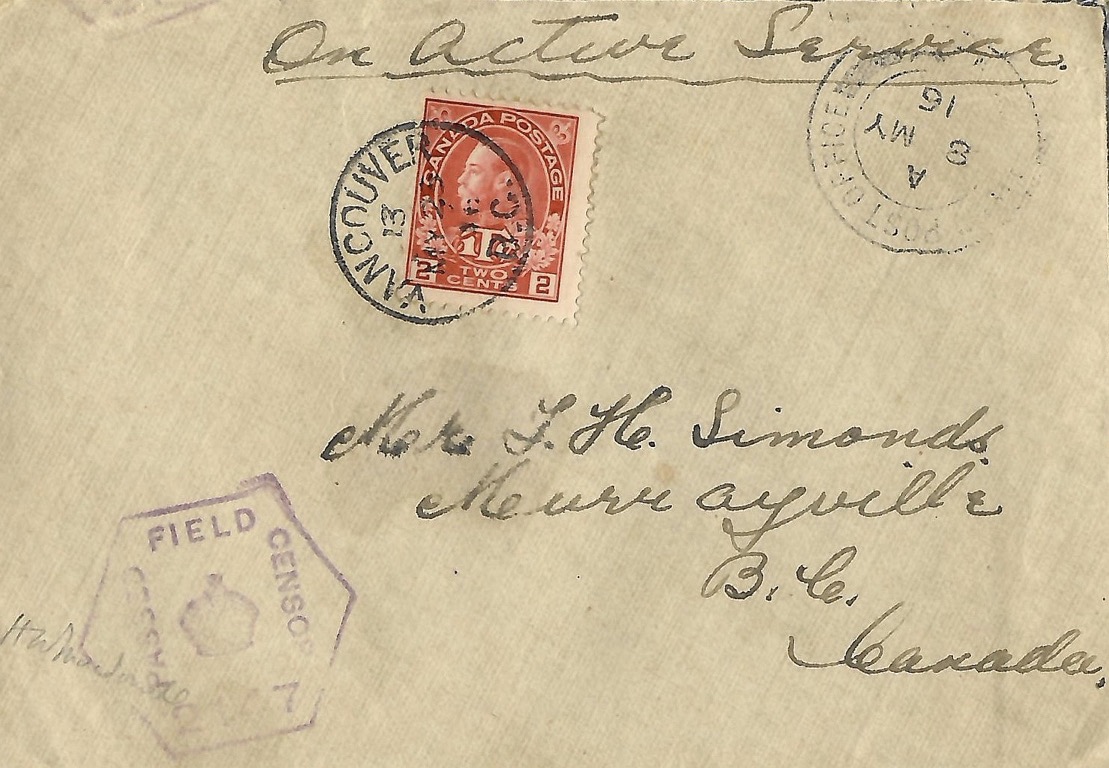
Lieutenant Robert Hazelette Simonds / CCGW Collection / 2023.02 / Gift of Mark Donahue
Remembering Their Own
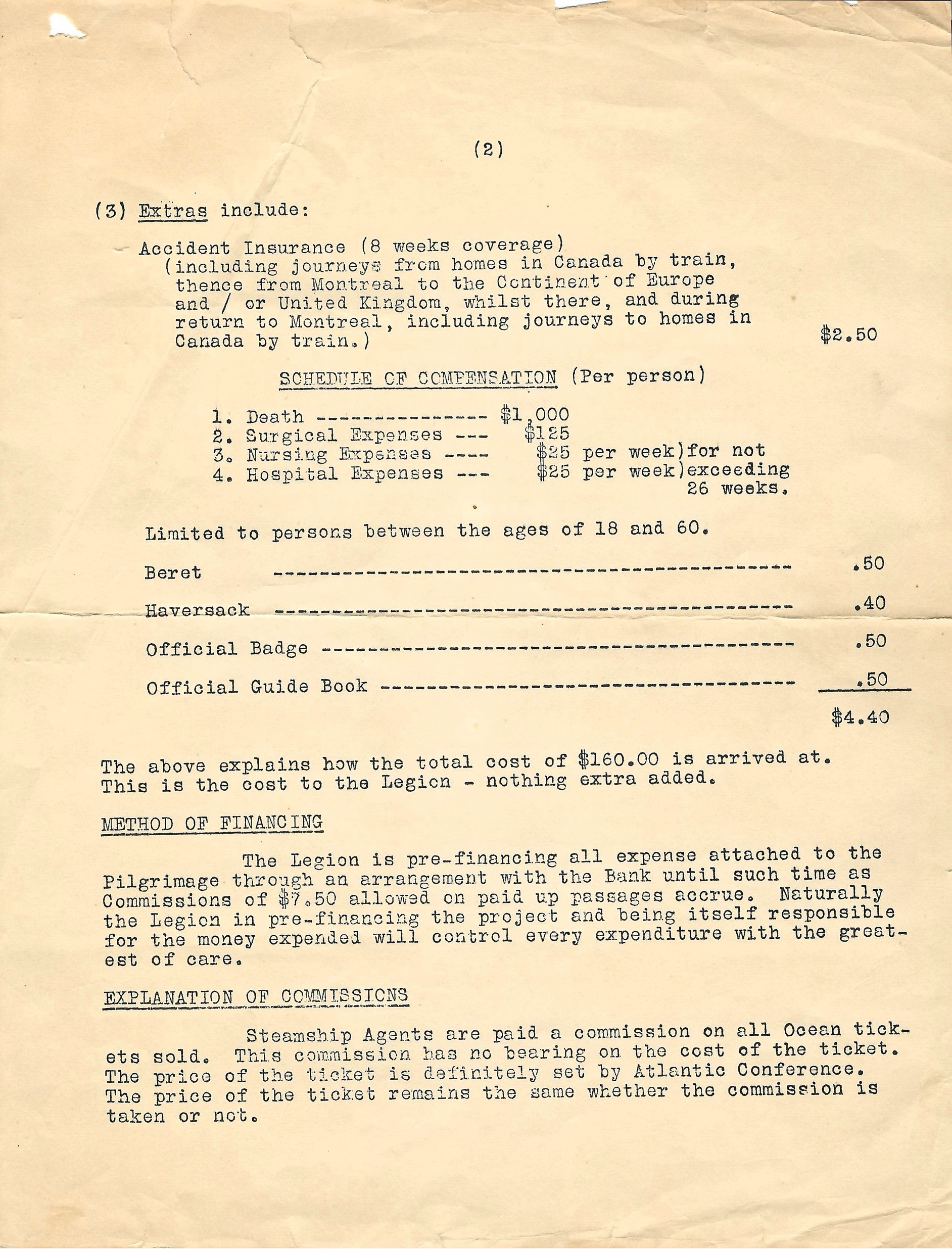
After the war, veterans carried on the work of remembering their fallen comrades through local clubs and national organizations. Many had begun forming associations even before returning home, and by 1919, most Canadian units had established networks of former soldiers. Groups like the Great War Veterans’ Association focused on honouring those who had died. Through reunions, newsletters, and public events, they honoured the memory of the fallen and provided support for one another in the decades to come.
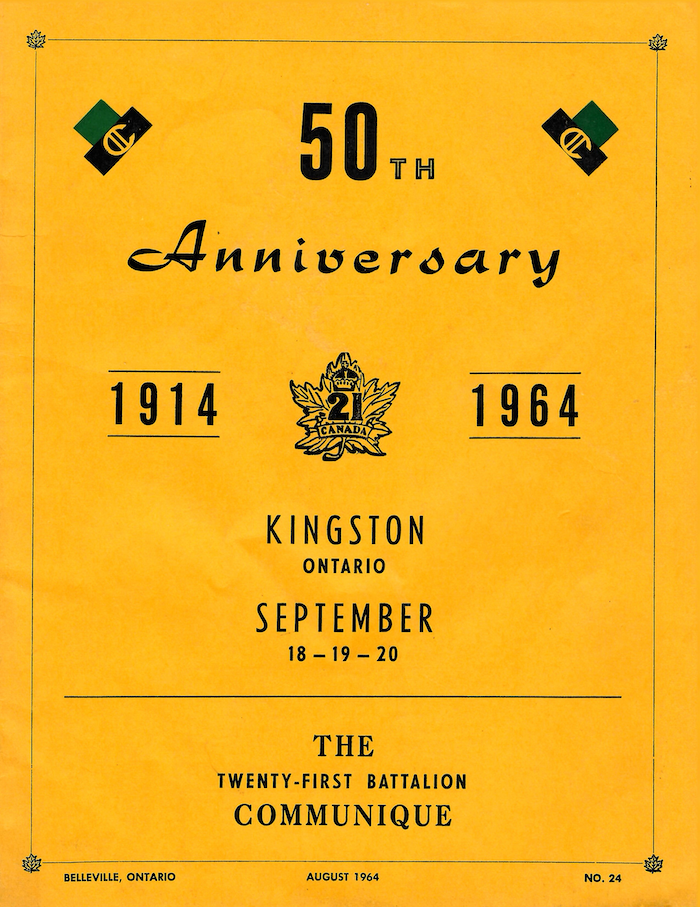
The Twenty-First Battalion Communique, 50th Anniversary / August 1964 / Belleville, Ontario / CCGW Collection
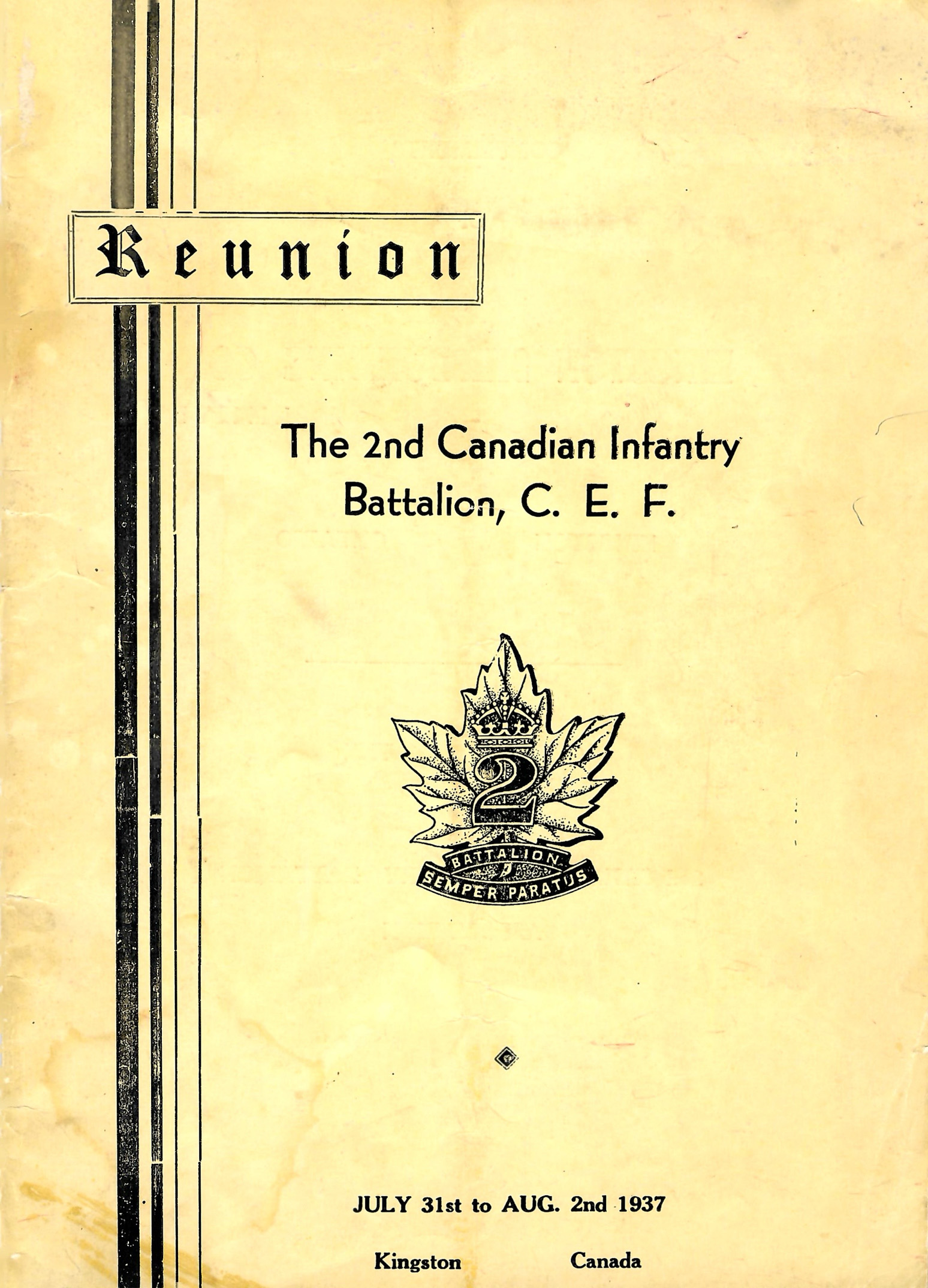
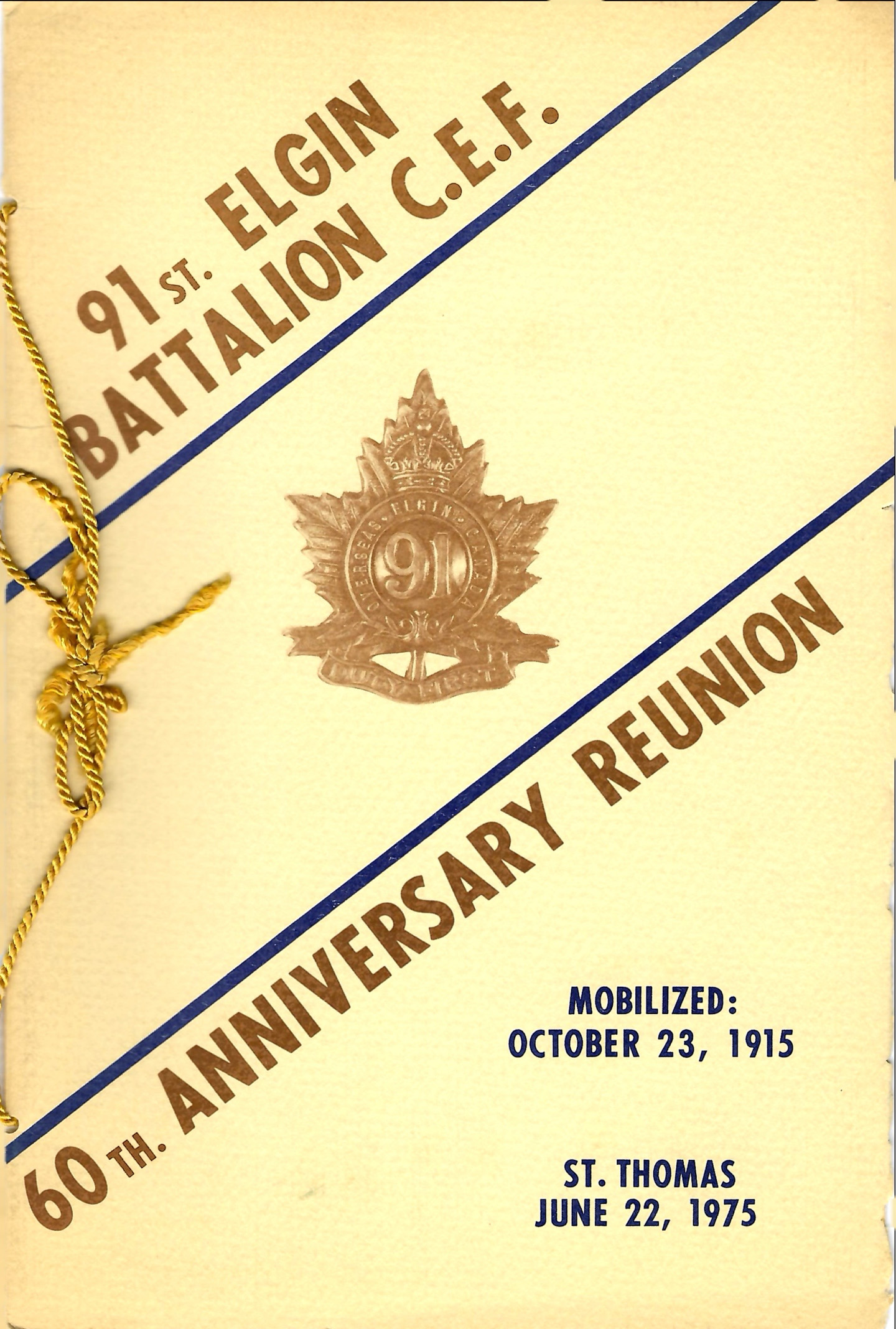
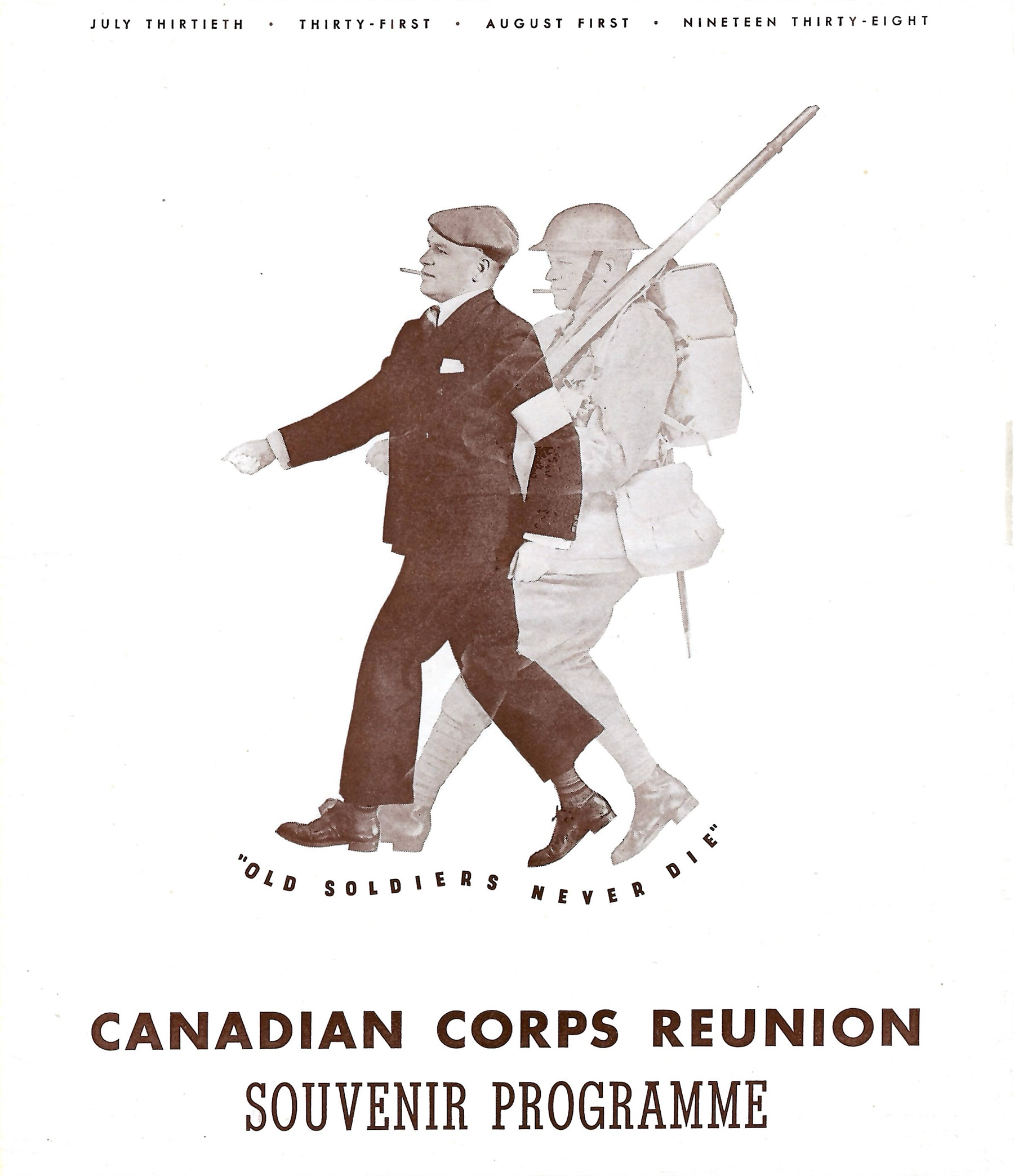
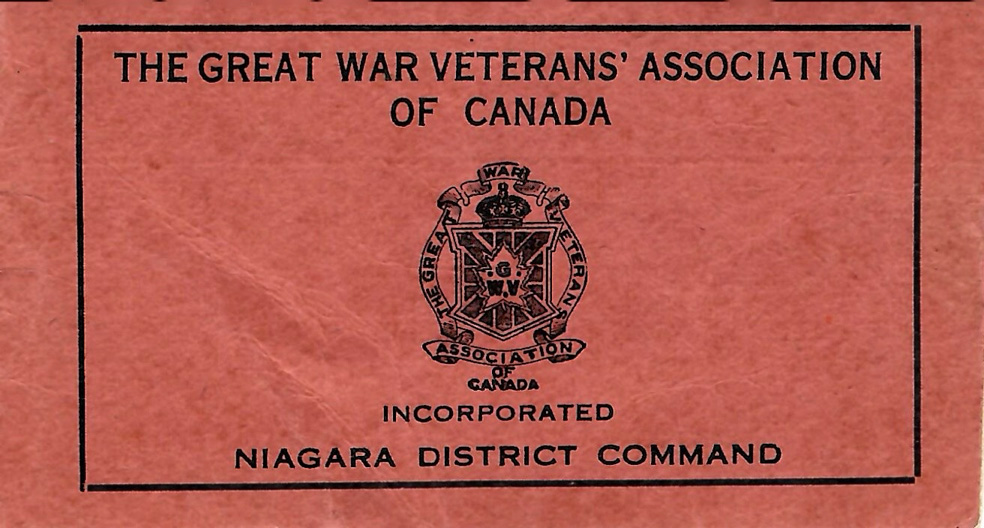
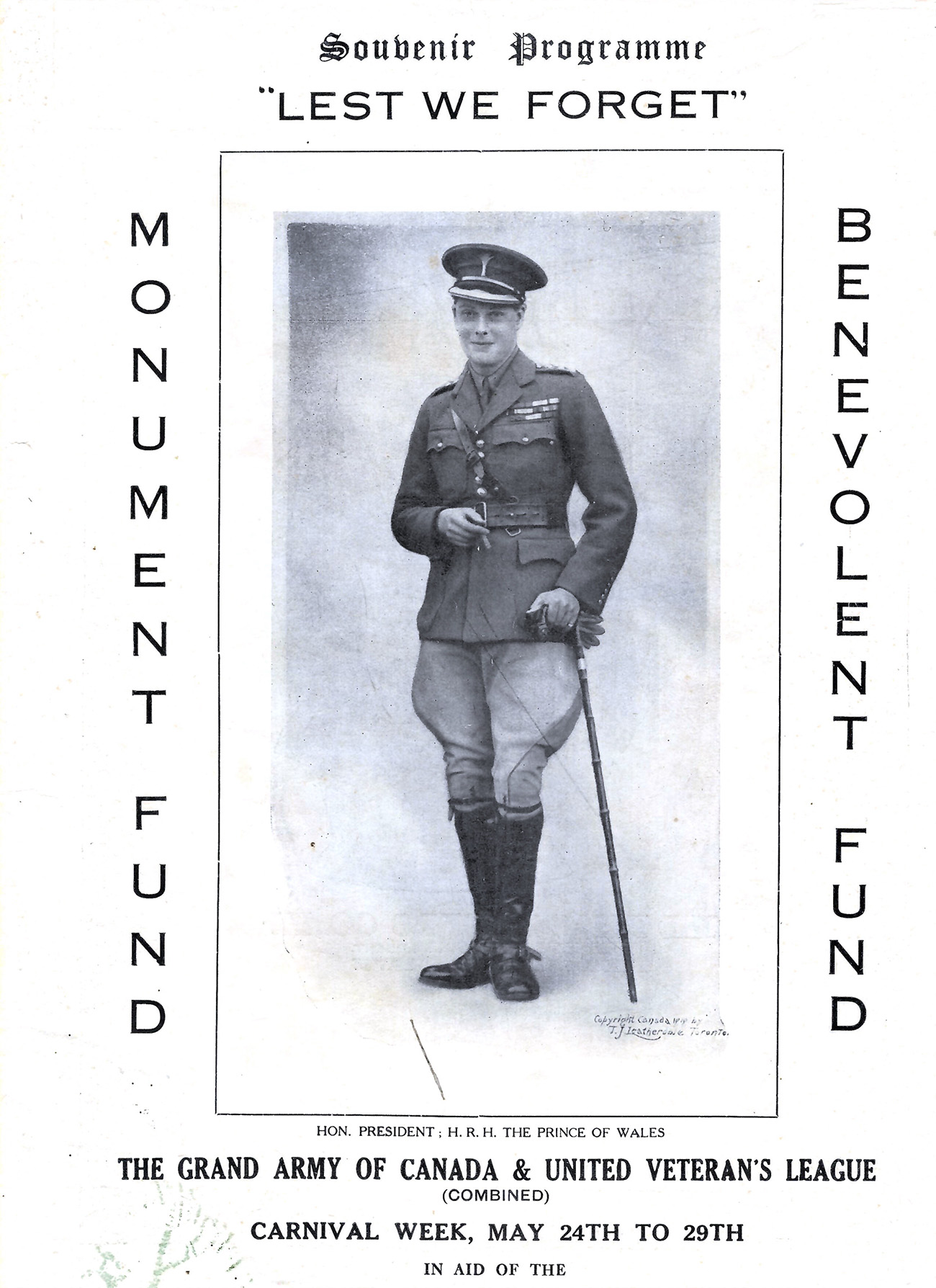
Selection of veterans’ reunion ephemera / CCGW Collection

Memorial Crosses
& Grave Markers
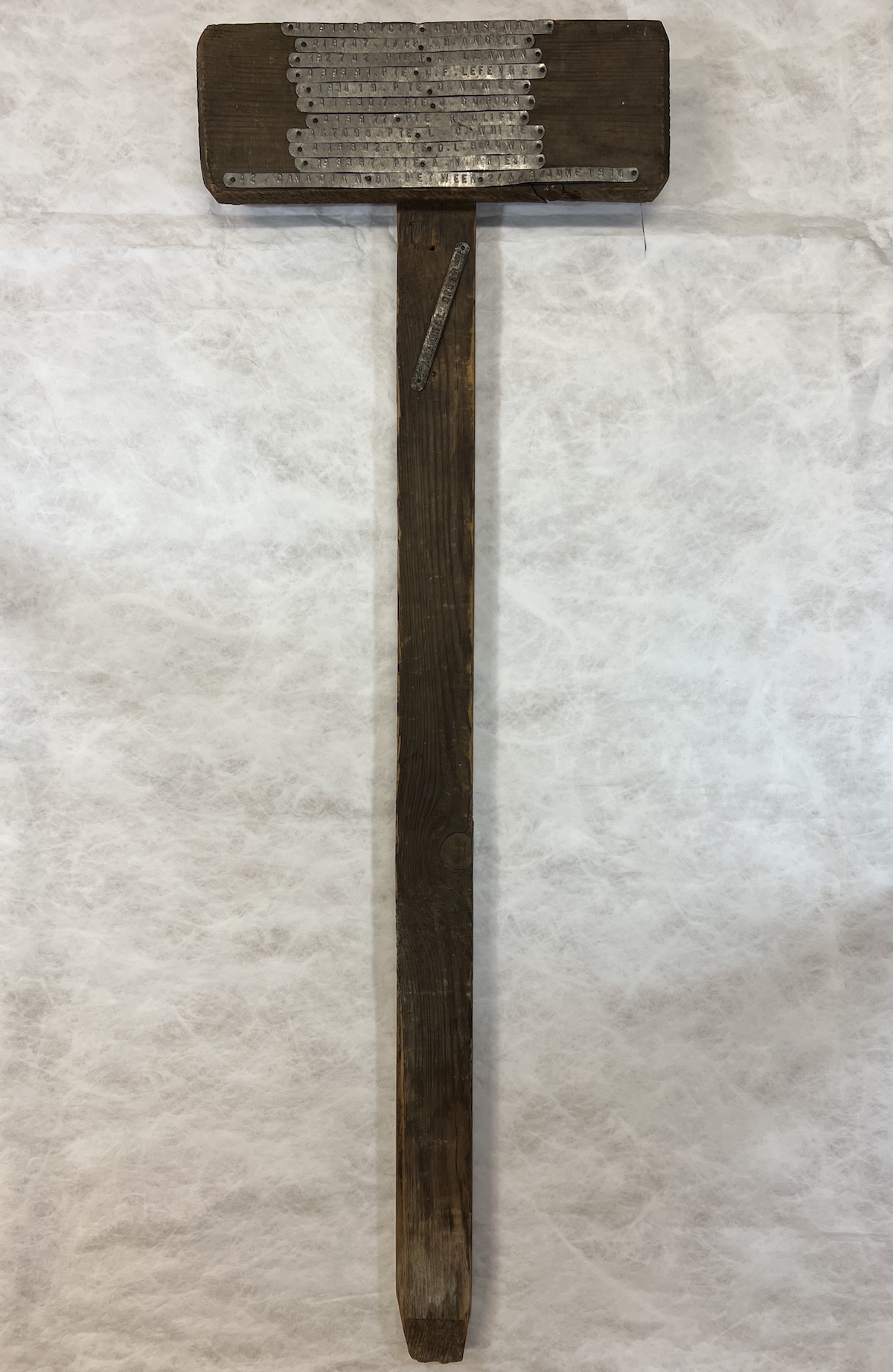
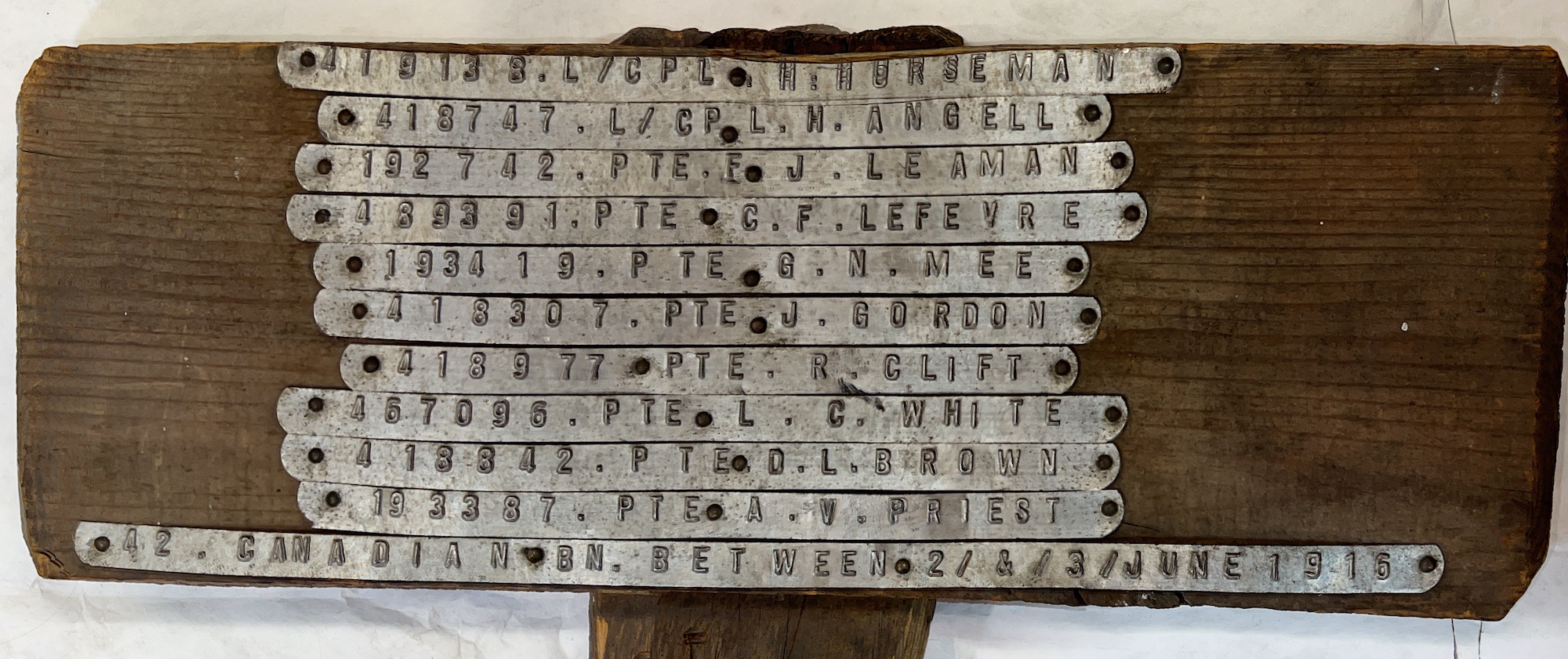
Learn about the men listed on this Memorial Cross
Wooden Memorial Cross, 42nd Battalion / CCGW Collection / 2016.50.01
This memorial cross commemorates ten members of the 42nd Battalion (Royal Highlanders of Canada) killed during the Battle of Mont Sorrel on 2–3 June 1916.
In the midst of the war, temporary wooden crosses were widely used to mark battlefield graves. In other cases, memorial crosses were used to commemorate soldiers whose bodies could not be recovered from the battlefields. At least 10,000 grave markers and memorial crosses were eventually returned to next of kin, many of which were eventually donated to heritage institutions.
While soldiers previously handled the burial of their deceased comrades, from 1917 the Imperial War Graves Commission (now the Commonwealth War Graves Commission) took charge of the exhumation and reburial of bodies. By 1918, 587,000 graves had been identified and a further 559,000 casualties were registered as having no known grave. By 1927, over 500 cemeteries had been established, containing over 400,000 headstones.
Those whose remains were never found are commemorated on various memorial sites. The ten men listed here are commemorated on the Menin Gate Memorial in Ypres, Belgium. Unveiled in 1927, more than 54,000 names are engraved on its walls, of which 6,935 are Canadian.
Embroidered Postcards
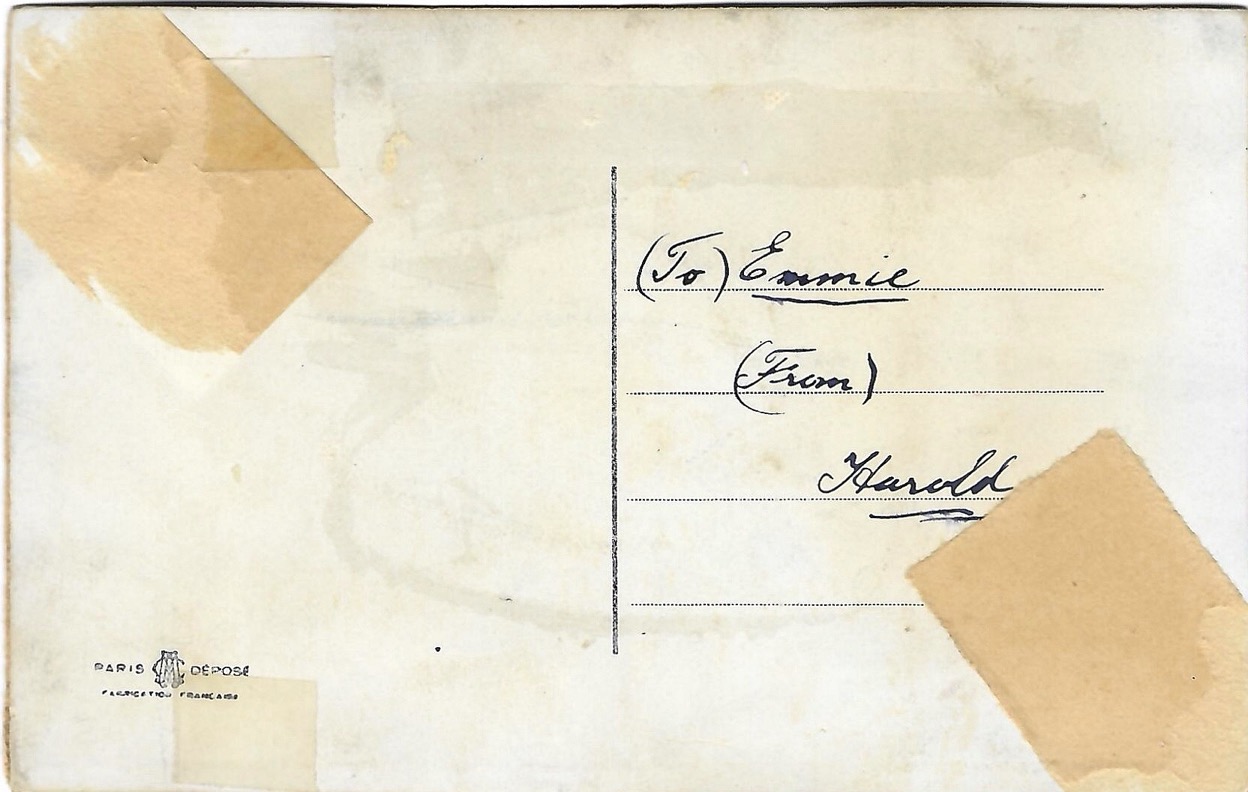
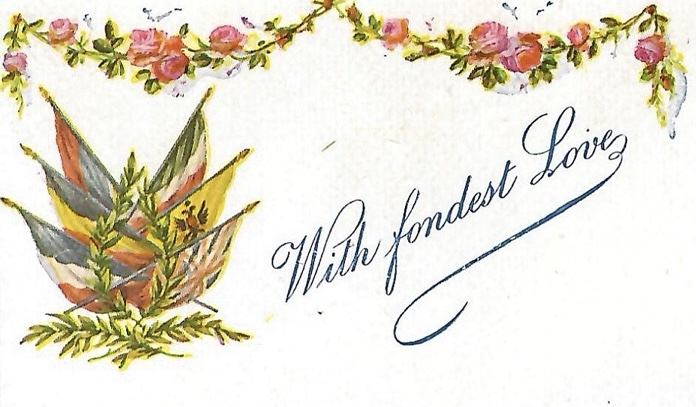
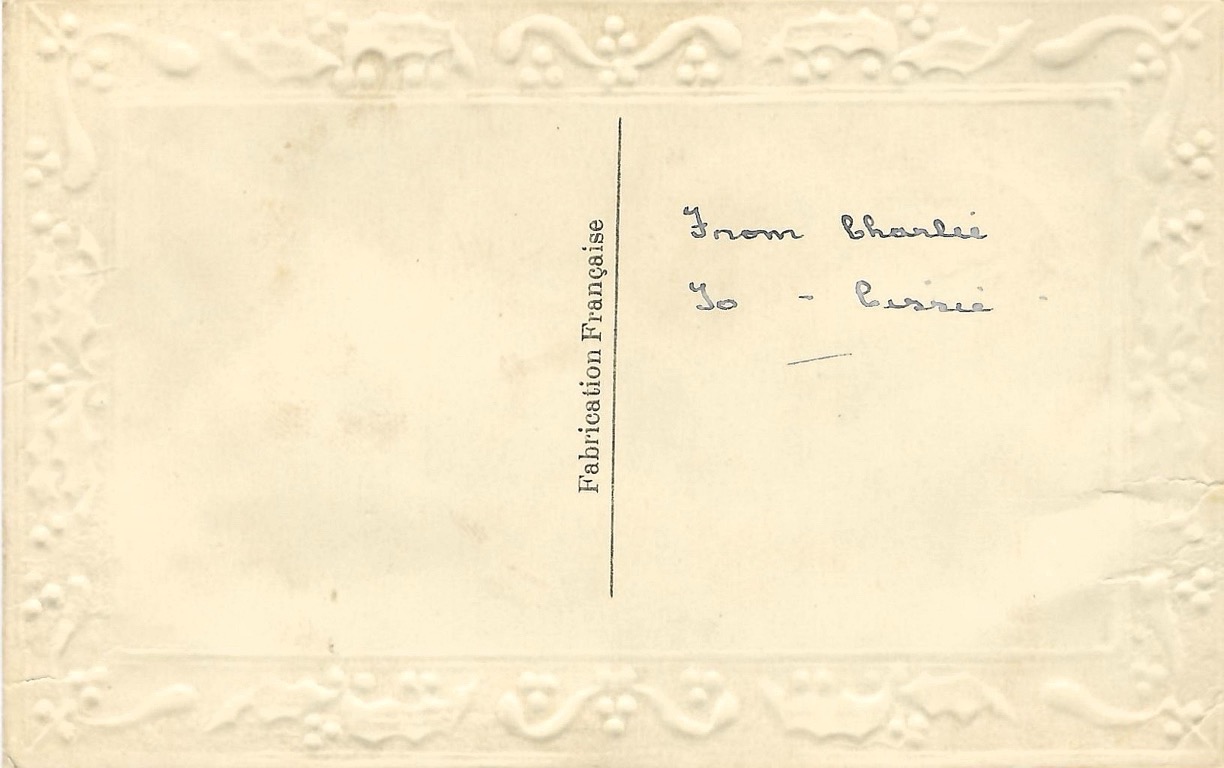
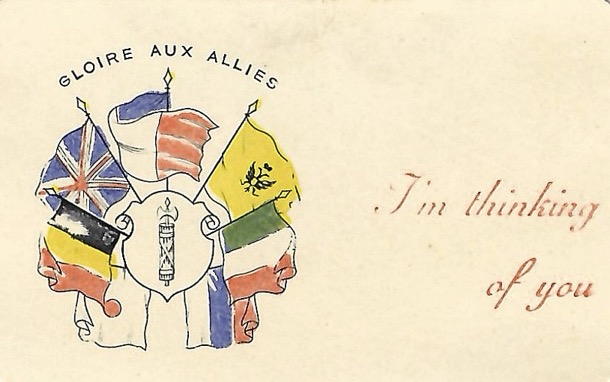
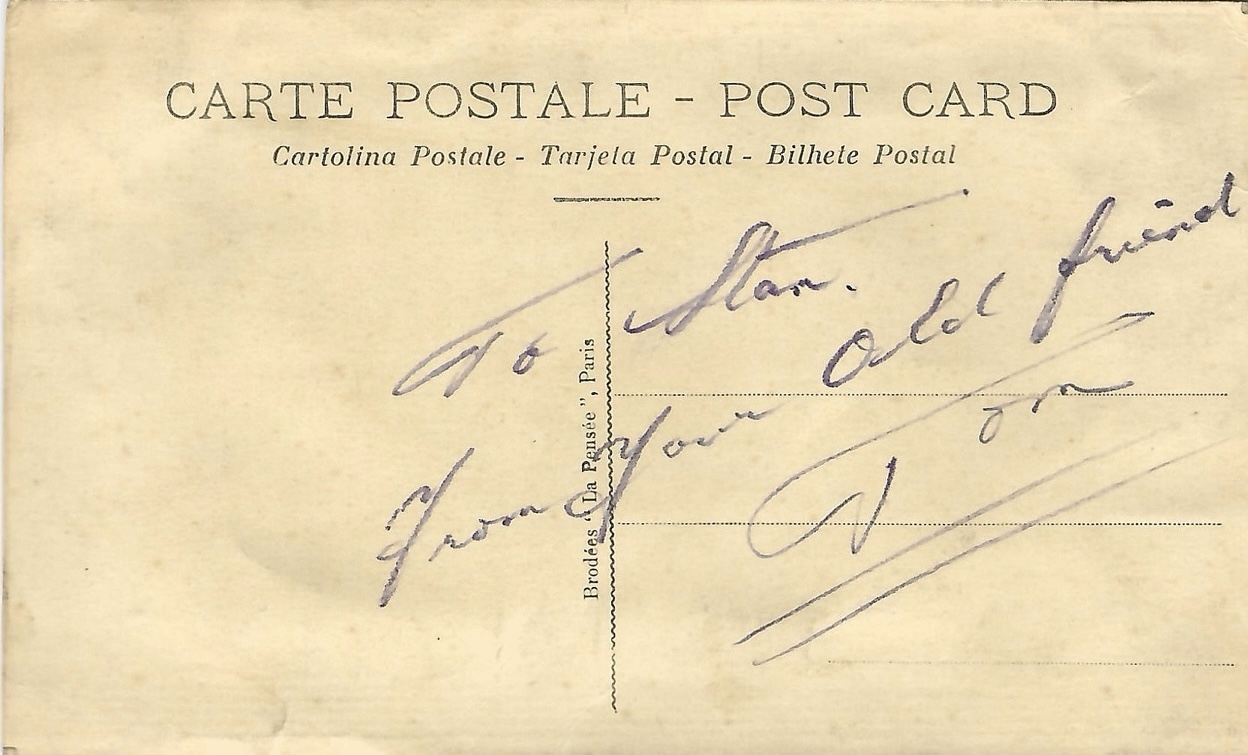
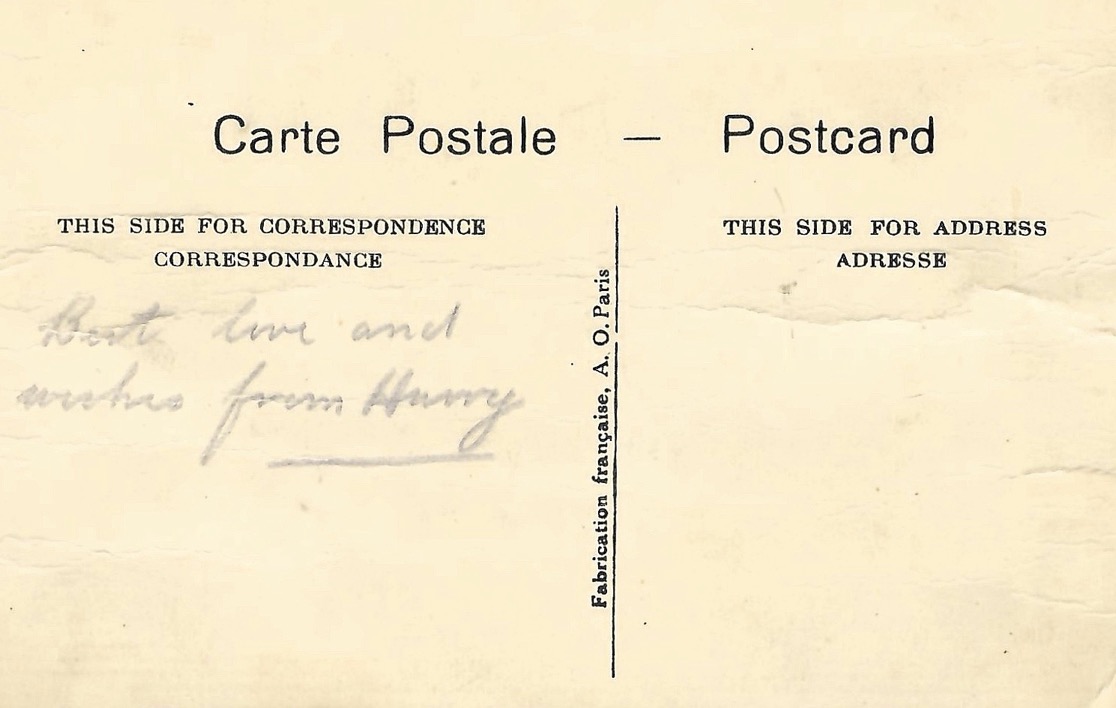
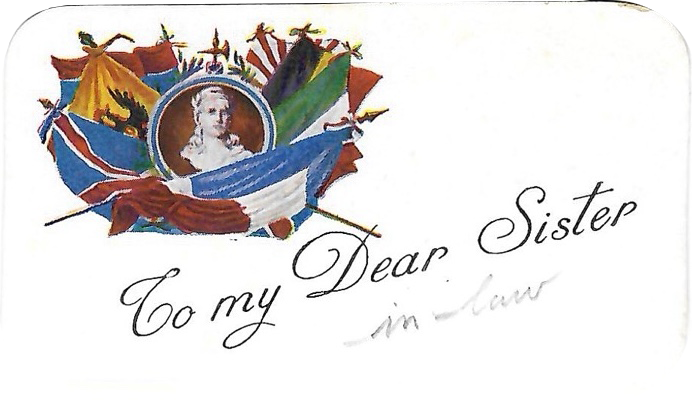
During the First World War, embroidered silk postcards became cherished keepsakes. They were usually purchased by soldiers serving in France or Belgium and sent from the front lines to reassure and delight loved ones at home.
The silk embroidery was often produced by women in France and Belgium, as well as by women displaced by the First World War in the United Kingdom, before being assembled into postcards in Paris or other city centers. Despite their fragility and relatively high cost, millions of these cards were made, serving as a tangible expression of affection between soldiers and their loved ones during the Great War.
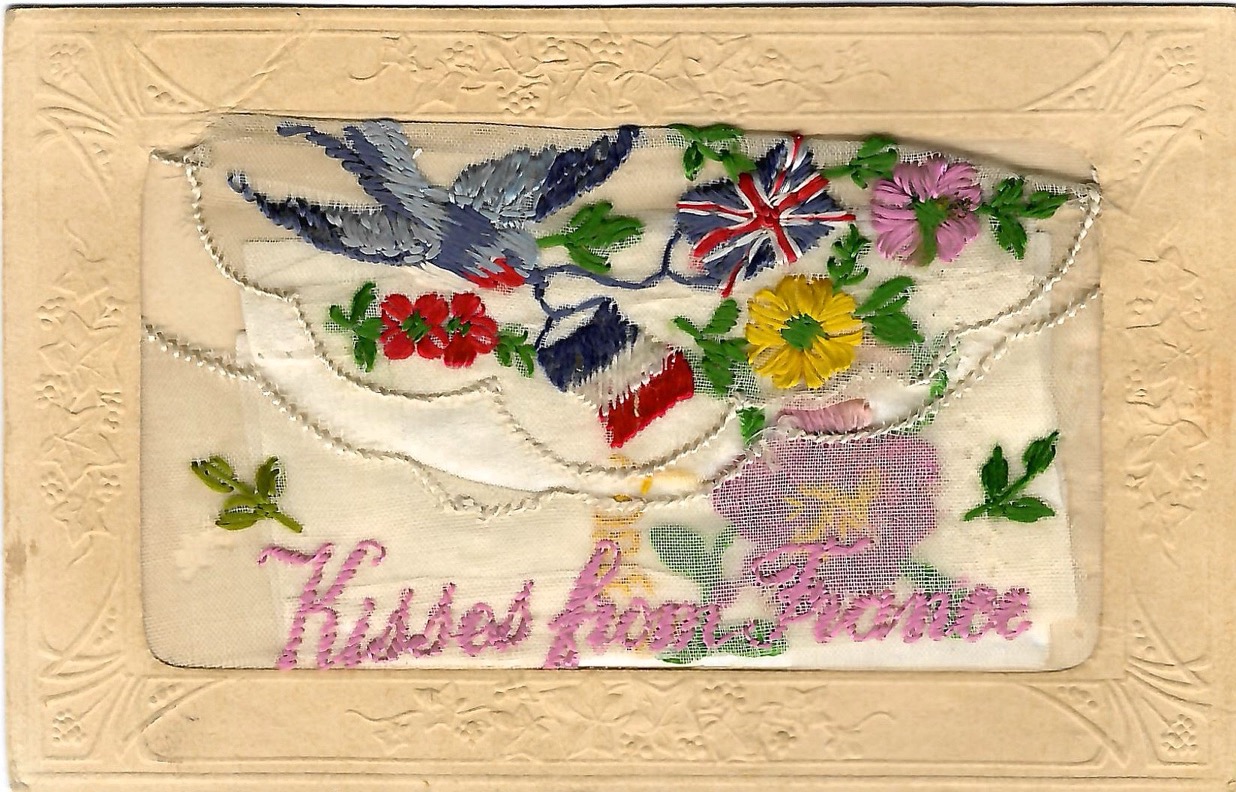
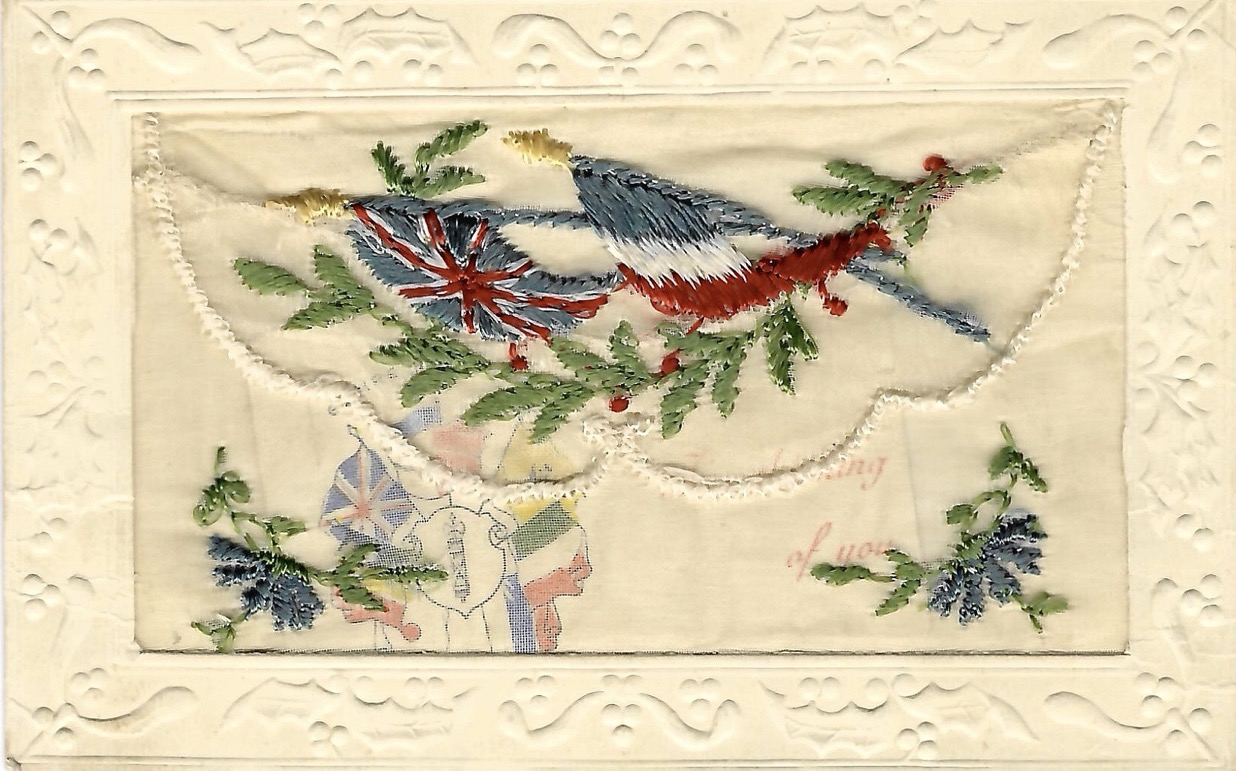
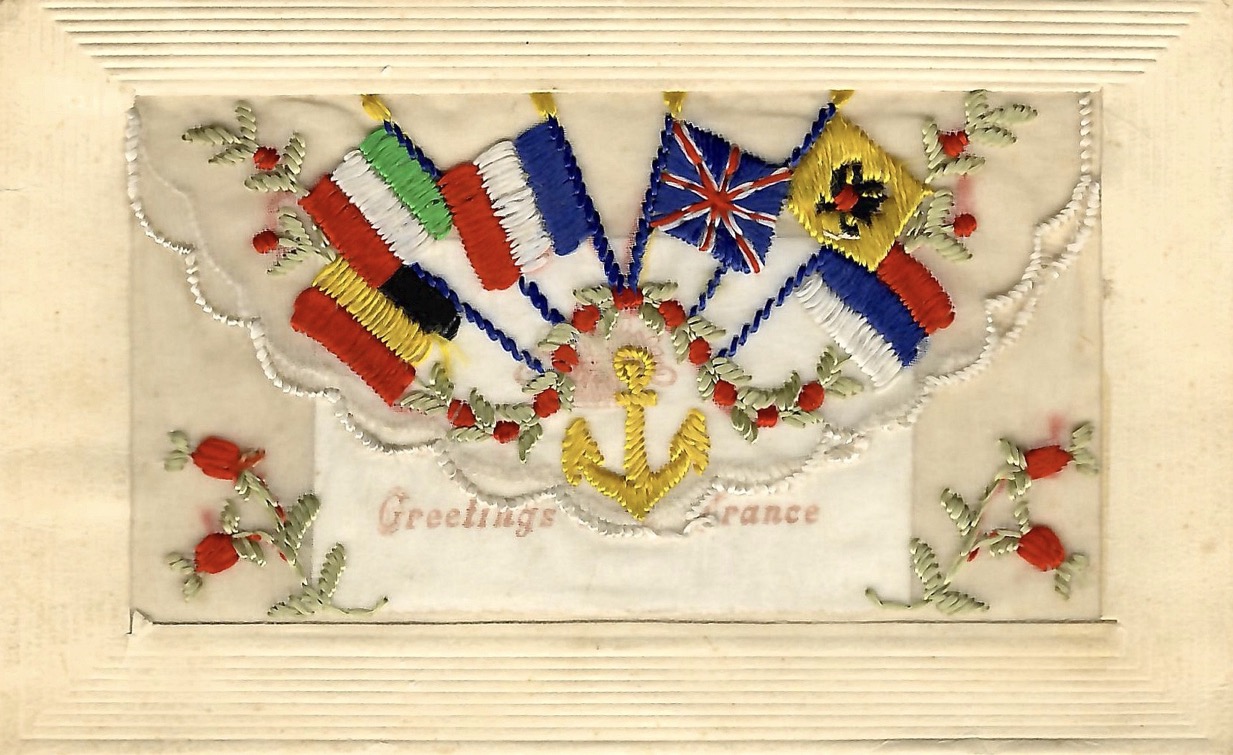
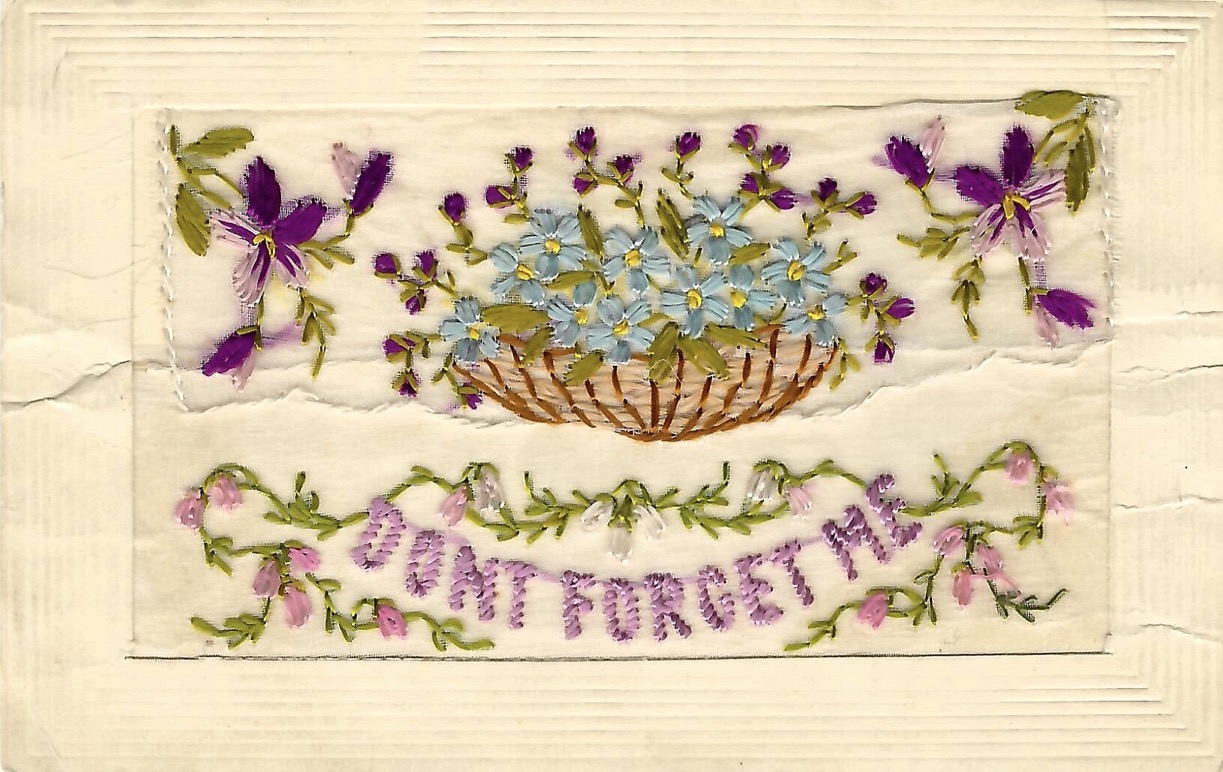
Embroidered Postcards, c. 1914-1918 / CCGW Collection
Sorrow as Muse
Creative Works Memorializing the Great War
A wealth of creative works emerged from the war, shaping how Canadians memorialized this mournful period. From literature and poetry to visual art and music, authors and artists took up the task of immortalizing the nuanced experiences of the Great War, from the lived realities of soldiers on the front to the grief experienced by loved ones back home. Unlike personal correspondences, these creative works were disseminated among the masses, playing a key role in shaping Canadian identity and collective memory in the interwar period.
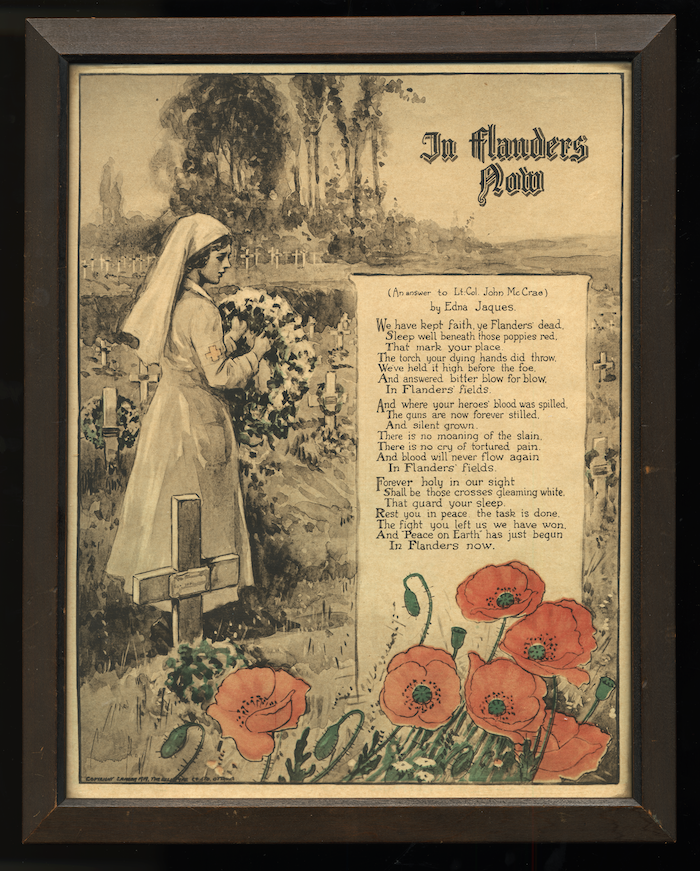
We have kept faith, ye Flanders' dead,
Sleep well beneath those poppies red,
That mark your place.
Excerpt from "In Flanders Now"
Illustrated print with poem “In Flanders Now” by Edna Jaques. 1919. / Canadian War Museum / 20060073-002
Edna Jaques
Creative responses to the First World War extended beyond firsthand experience. Artists and writers revisited and reinterpreted earlier works, shaping new perspectives of loss and distance from the home front. Edna Jaques (1891–1978), a Canadian poet raised in rural Saskatchewan, exemplifies this process. Written shortly after the war, her poem "In Flanders Now" responds directly to John McCrae’s "In Flanders Fields," reflecting how the war continued to inspire creative dialogue in its aftermath.
Mike Mountain Horse
Despite facing discrimination, more than 4,000 Indigenous men enlisted in the First World War, including Mike Miistatisomitai Mountain Horse (1888-1964). Member of the Kainai Nation in Alberta, he attended residential school from the age of six. His older brother, Albert—the first Indigenous person from Alberta to enlist—died of tuberculosis after lung damage caused by gas attacks at the Second Battle of Ypres. Seeking to honour his brother, Mike enlisted in May 1916, serving with the 191st and later the 50th Battalion.
Mountain Horse was discharged in 1919. After the war, he collaborated with Ambrose Two Chiefs who designed and painted The “Great War” Deeds of Mike Mountain Horse, a calf-hide story robe that illustrates his wartime experiences. His contributions remain a vital part of Canada’s history, highlighting the significant yet often overlooked role underrepresented groups played in shaping the nation's wartime experience and collective identity.
The Great War Deeds of Mike Mountain Horse
Take a closer look at the calf skin story robe
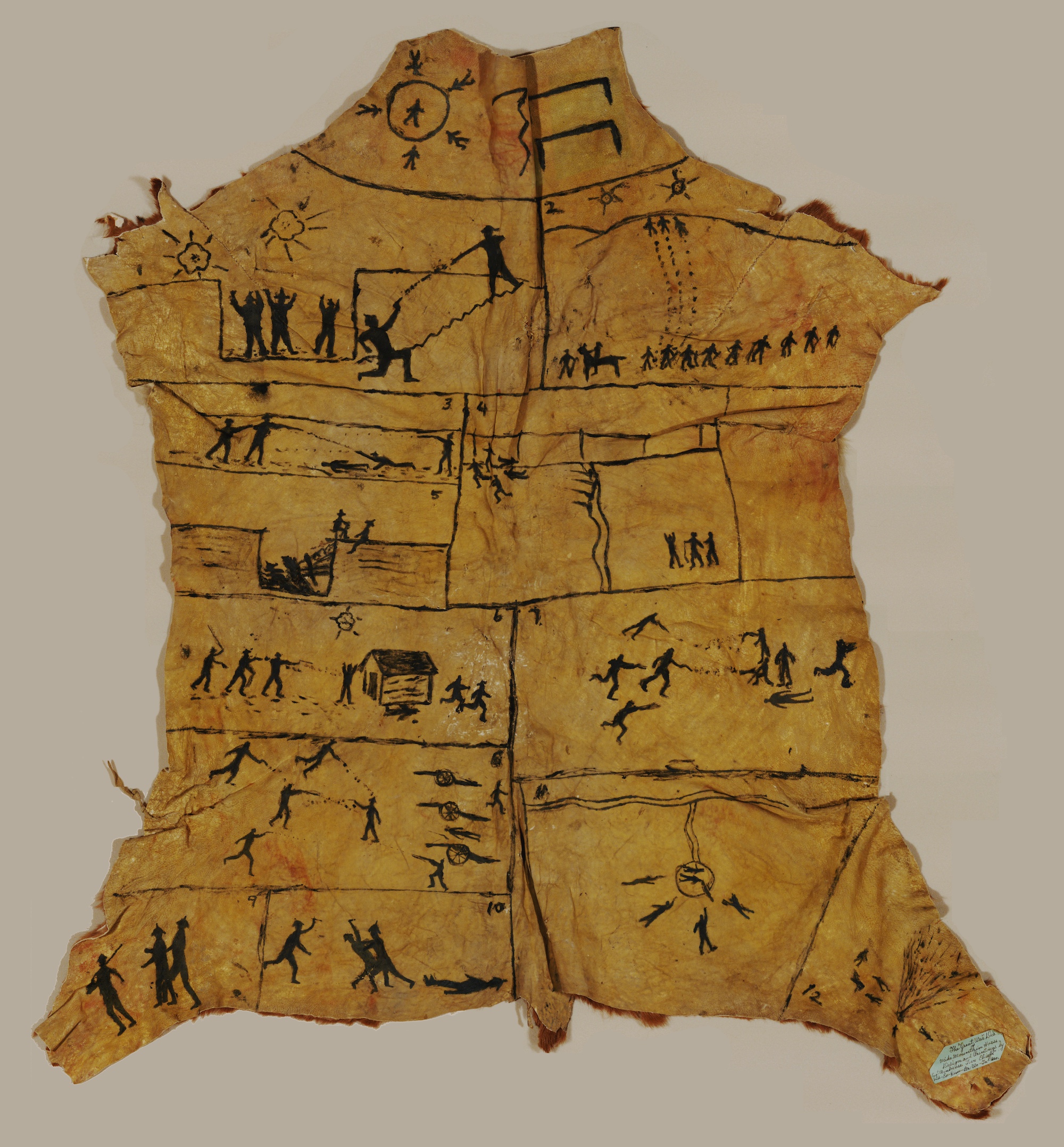
Click on the image above and discover the stories in each panel
The “Great War” Deeds of Mike Mountain Horse / Design and painting by Ambrose Two Chiefs / Esplanade Arts and Heritage Centre, Medicine Hat, Alberta / B52.111
Descriptions paraphrased from text written by Mike Mountain Horse, c. 1938, graciously provided by Esplanade Arts and Heritage Centre
L’épopée du
vingt-deuxième
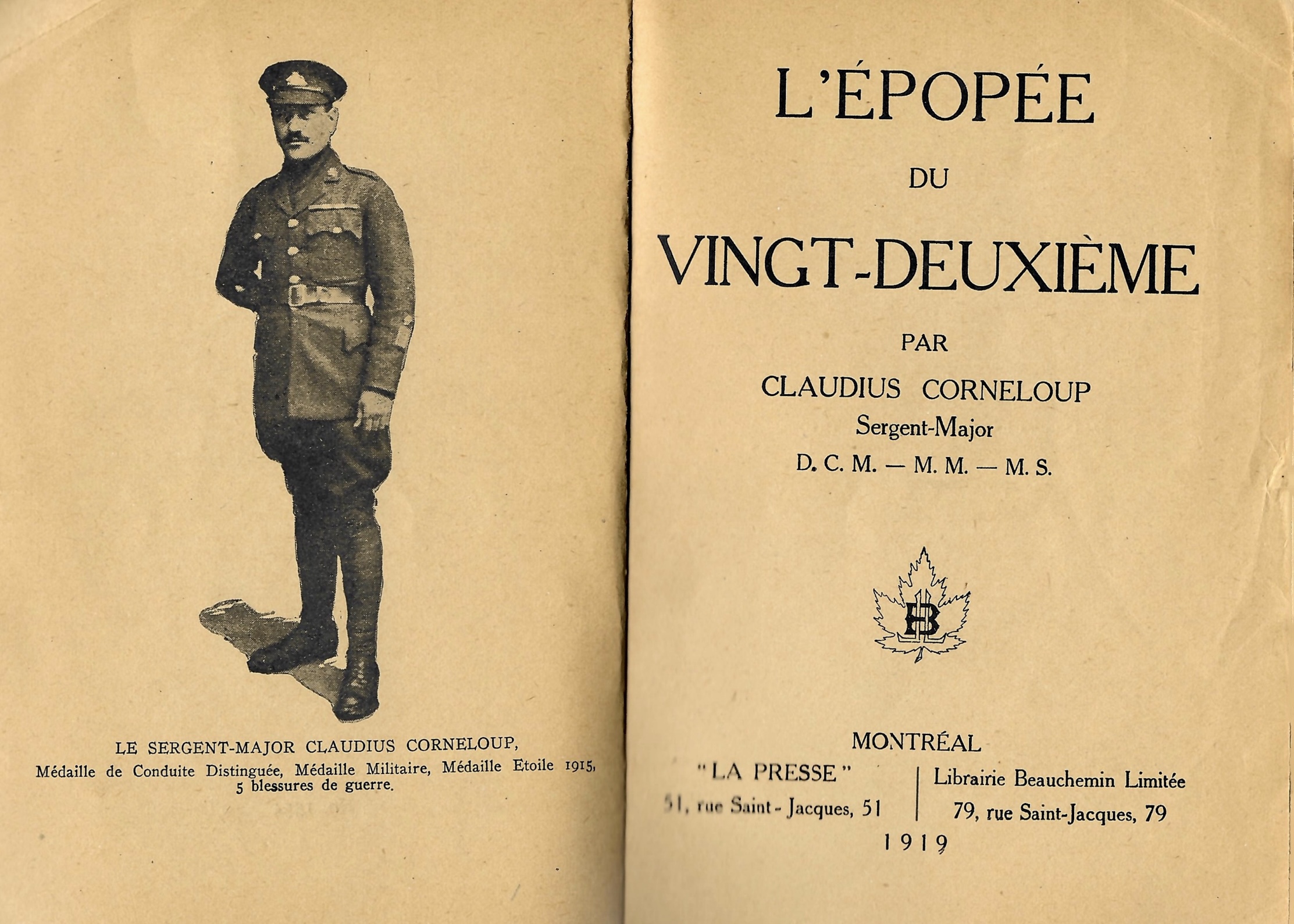
Having immigrated from Alsace to Canada in 1908, Sergeant-Major Claudius Corneloup enlisted as part of the 22nd Battalion, the only French-speaking infantry battalion of the Canadian Expeditionary Force. Its soldiers fought with distinction in some of the war’s most grueling battles, including Courcelette, Vimy Ridge, and Passchendaele.
Upon Sergeant-Major Corneloup’s return to Montreal in 1919, he published his earliest text on his battalion, L’épopée du vingt-deuxième, which presents the exploits of the 22nd Battalion in battles across Flanders and France. Corneloup’s literary work exemplifies not only how soldiers chose to remember and honour their own, but also how their direct experience of the conflict influenced Canadian collective memory in the decades following the Great War.
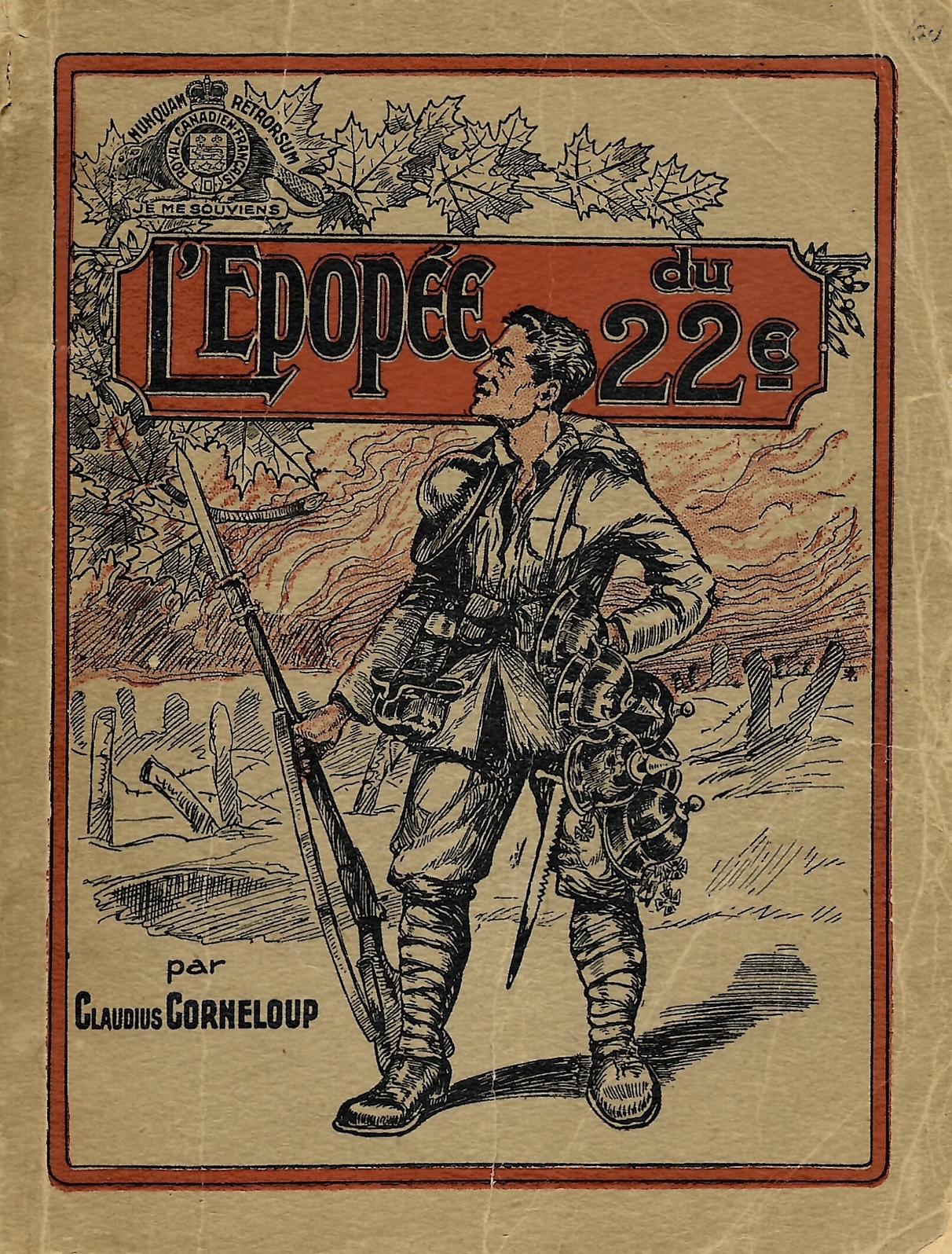
Not Forgotten
New Approaches to Commemoration
As the Great War grows more distant in time, new modes of commemoration have proven essential in preserving the sacrifices of veterans in Canada's collective memory, particularly for new generations of Canadians. Ranging from innovative community projects, youth workshops, new memorials, and the release of commemorative stamps, these new forms of remembrance ensure that the legacy of those who served continues to resonate with a wide audience, fostering a deeper understanding of the war's impact on the nation.
No. 2 Construction Battalion
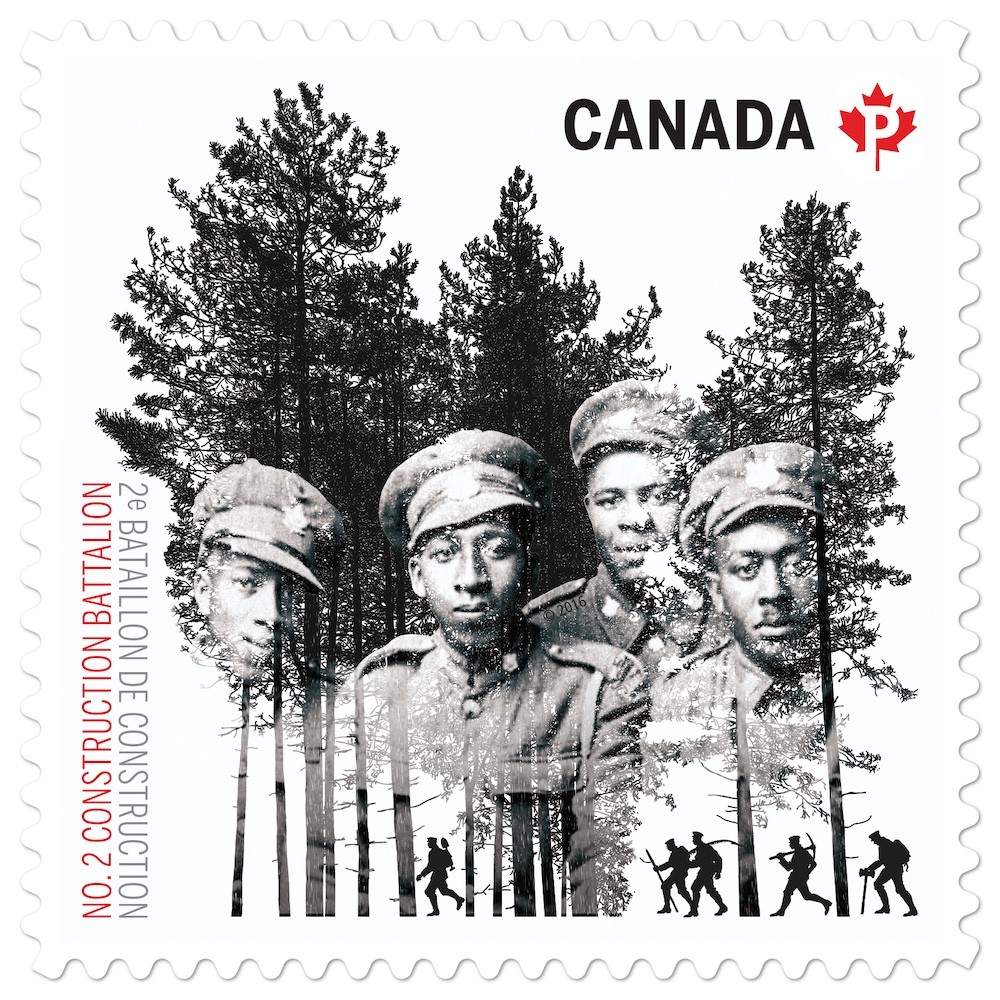
No. 2 Construction Battalion Stamp / Designed by par Lara Minja © 2016 | Canada Post Corporation / Reproduced with permission.
Despite widespread racism and rejection by recruiting officers, Black Canadians fought to enlist during the First World War. More than 200 volunteers were turned away by the end of 1915. Formed in 1916, the No. 2 Construction Battalion—the only all-Black unit in the Canadian Expeditionary Force—was barred from combat and assigned to labour duties with the Canadian Forestry Corps in France, supporting forestry, road building, and infrastructure work. Disbanded in 1920, the battalion’s contributions went largely unrecognized until late in the twentieth century. In 1992, its formation was designated a national historic event, followed by the unveiling of a memorial in Pictou, Nova Scotia, and the issuance of a commemorative Canada Post stamp in 2016.
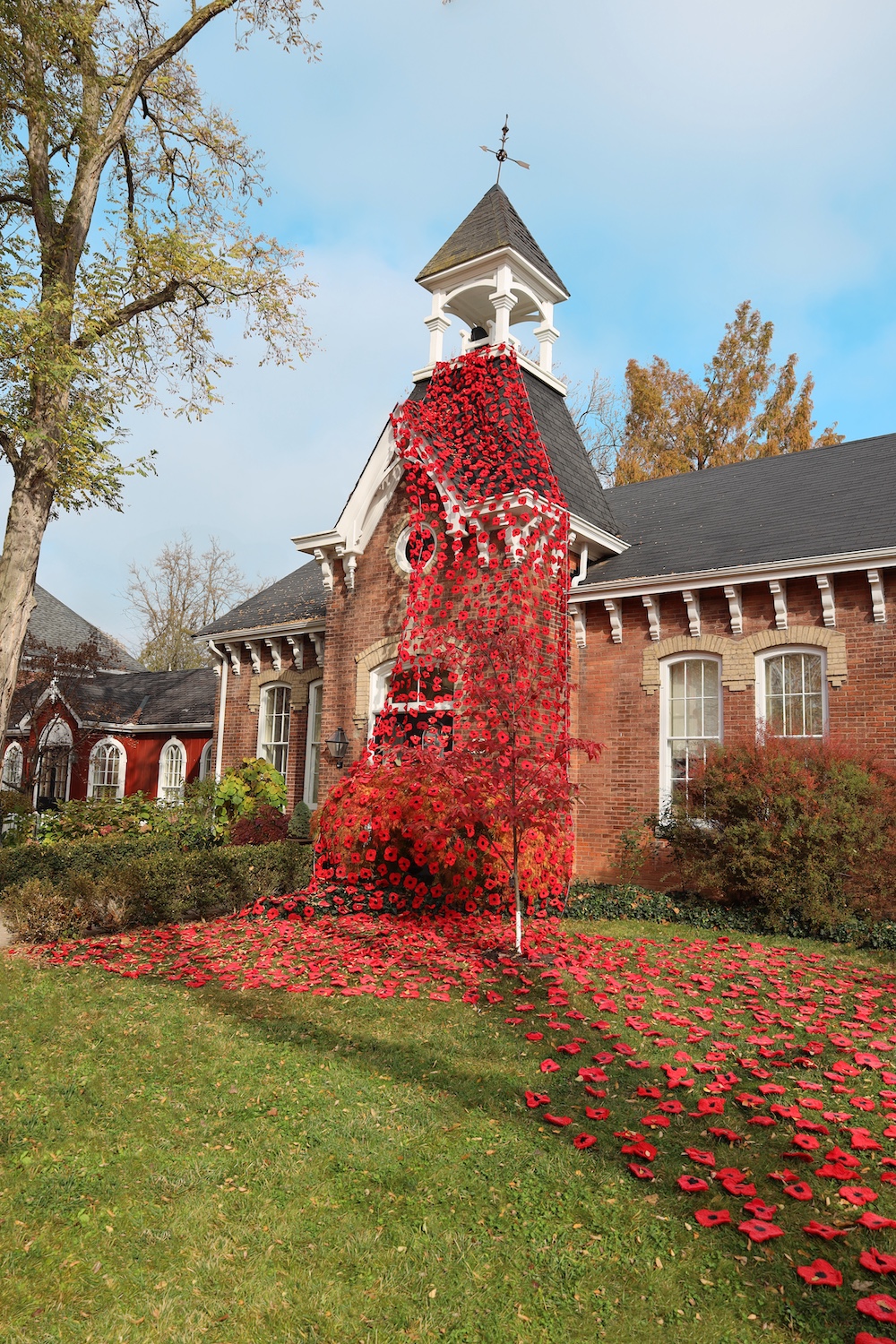
The Poppy Project
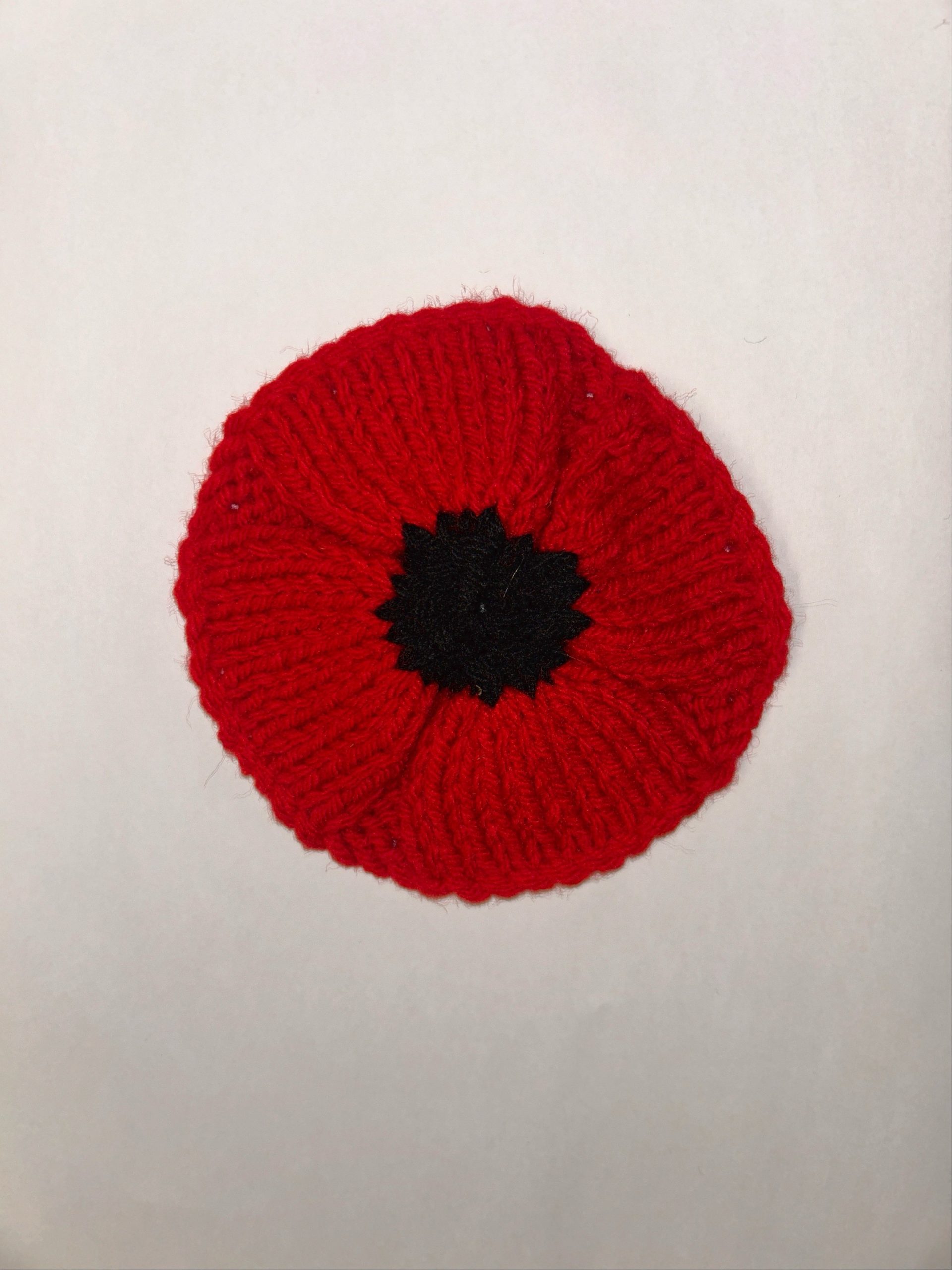
Pioneered by the Niagara Falls History Museum, the Poppy Project is a participatory art installation that engages the public in active commemoration. Launched in 2020, it invited Canadians to crochet and knit poppies, later linked together and draped over local buildings and landmarks as a visible symbol of remembrance. Since then, the project has expanded to the Niagara-on-the-Lake Museum and other communities across Canada, reflecting a growing desire for personal connection to commemoration among Canadians in the twenty-first century.
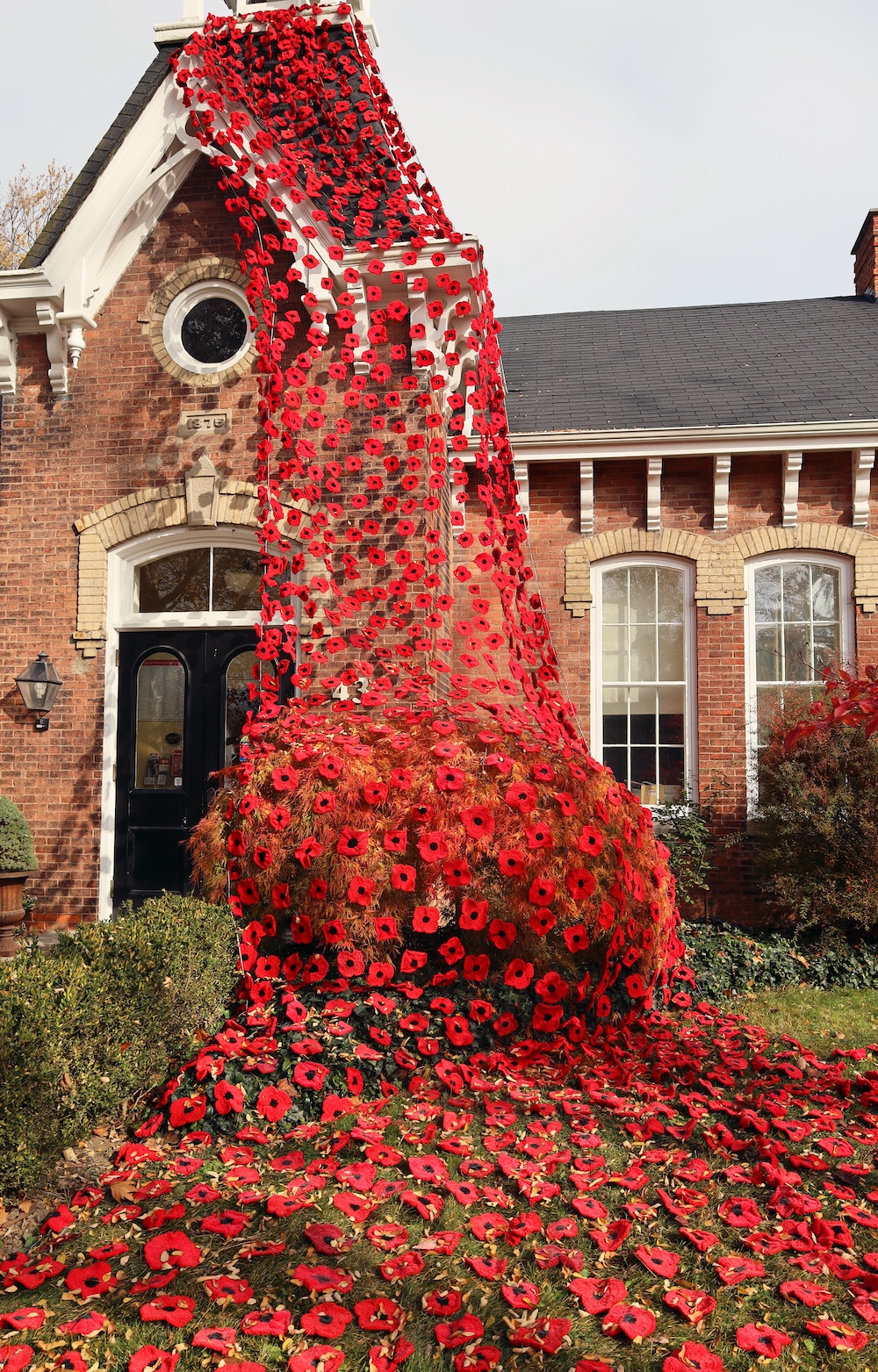
The Poppy Project in Niagara / Courtesy of Niagara-on-the-Lake Museum / Reproduced with permission.
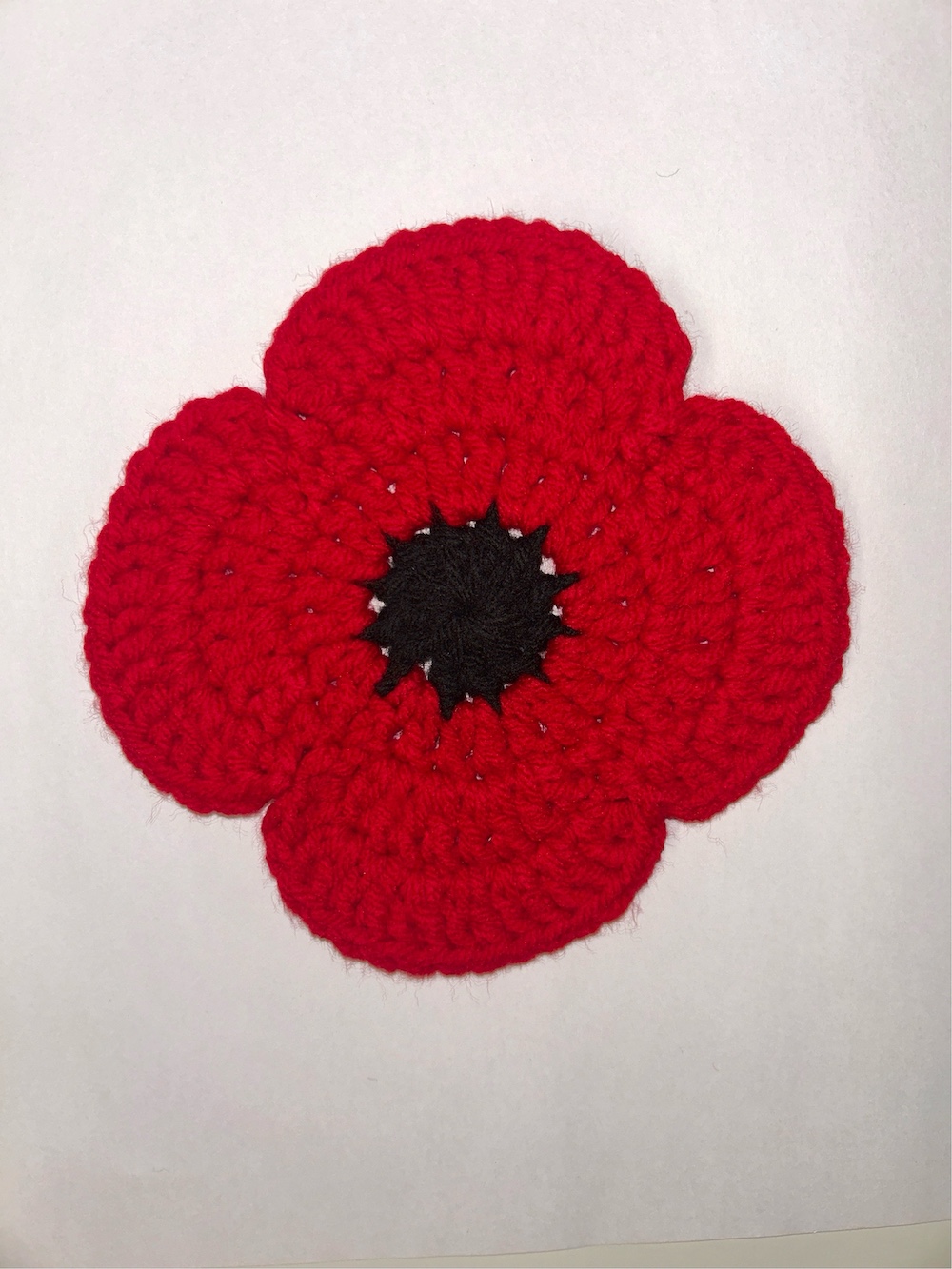
Crocheted and knitted poppies / Niagara Falls History Museum & Stick'N Needles Guild
They shall grow not old, as we that are left grow old:
Age shall not weary them, nor the years condemn.
At the going down of the sun and in the morning
We shall remember them.
Excerpt from “For the Fallen” by Laurence Binyon
We think you might also like...


Support Us
Enjoying our Digital Exhibitions?
Consider making a donation today to help us continue producing educational content like this.